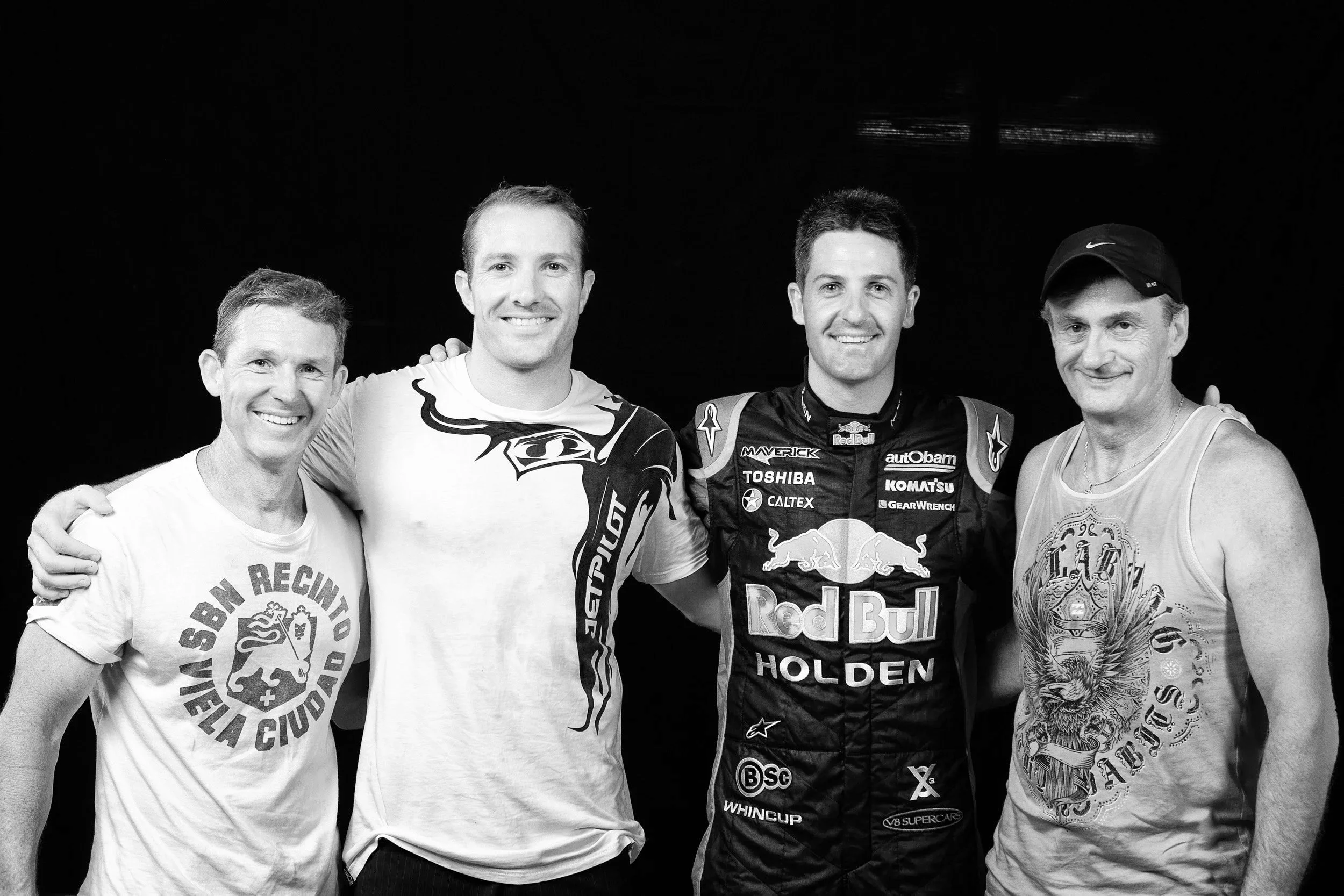
The Concept
Setting someone on fire isn't something you do every day.
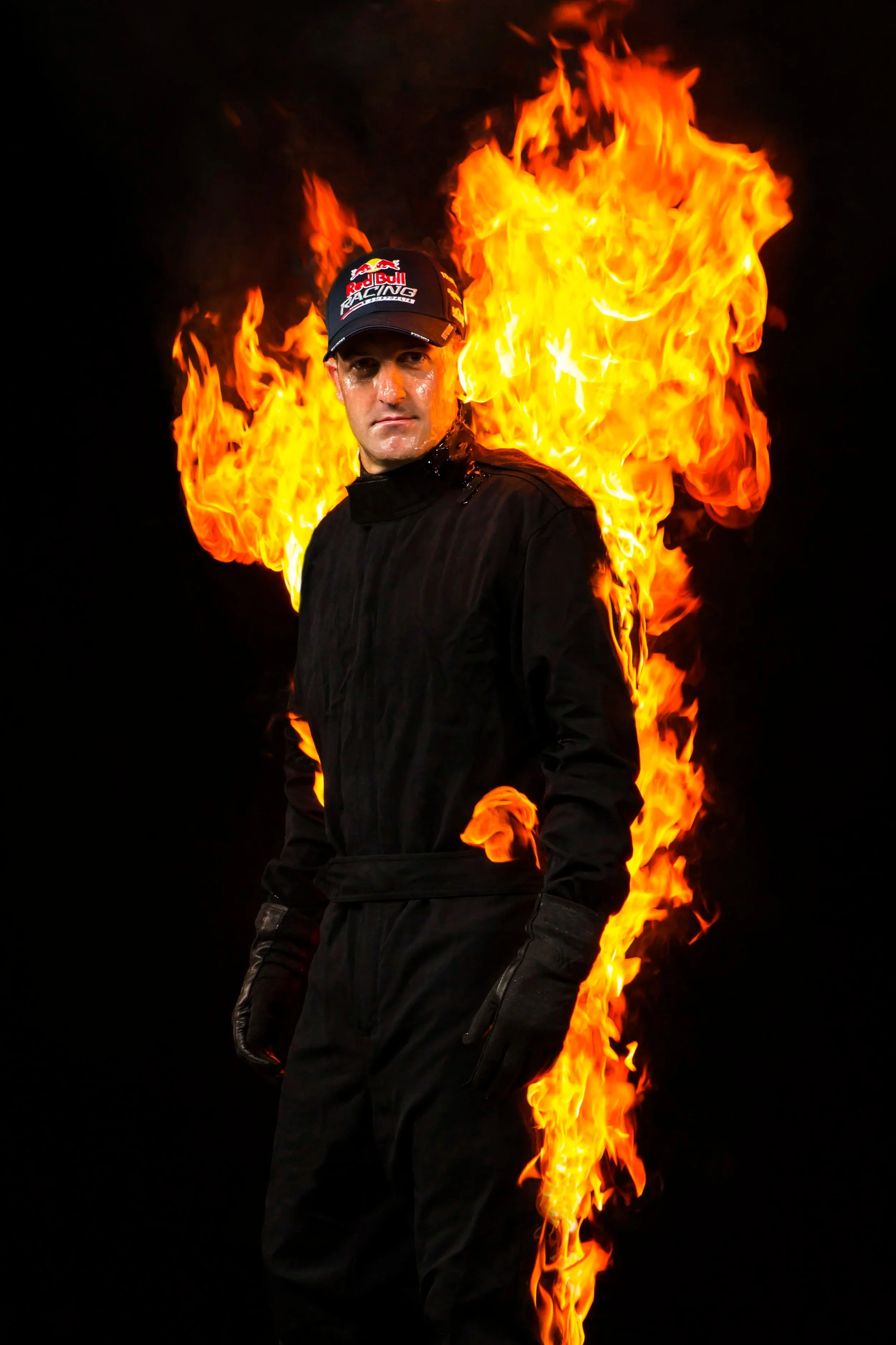
Strangely though, I can't say being the one on fire would have caused any more anxiety than being the photographer trusted to make sure all the planning, effort and commitment paid off with a killer shot. Especially when there was a very limited opportunity to get it right.
When I get a call from Wheels Magazine, it's usually for a comparison test, a tag-along on a new vehicle launch or a feature drive. This call was a little different.
Alex Inwood had recently moved across from Auto Action to Wheels magazine. Keen to make an impression, he called me with an idea that was equal parts exciting and terrifying.
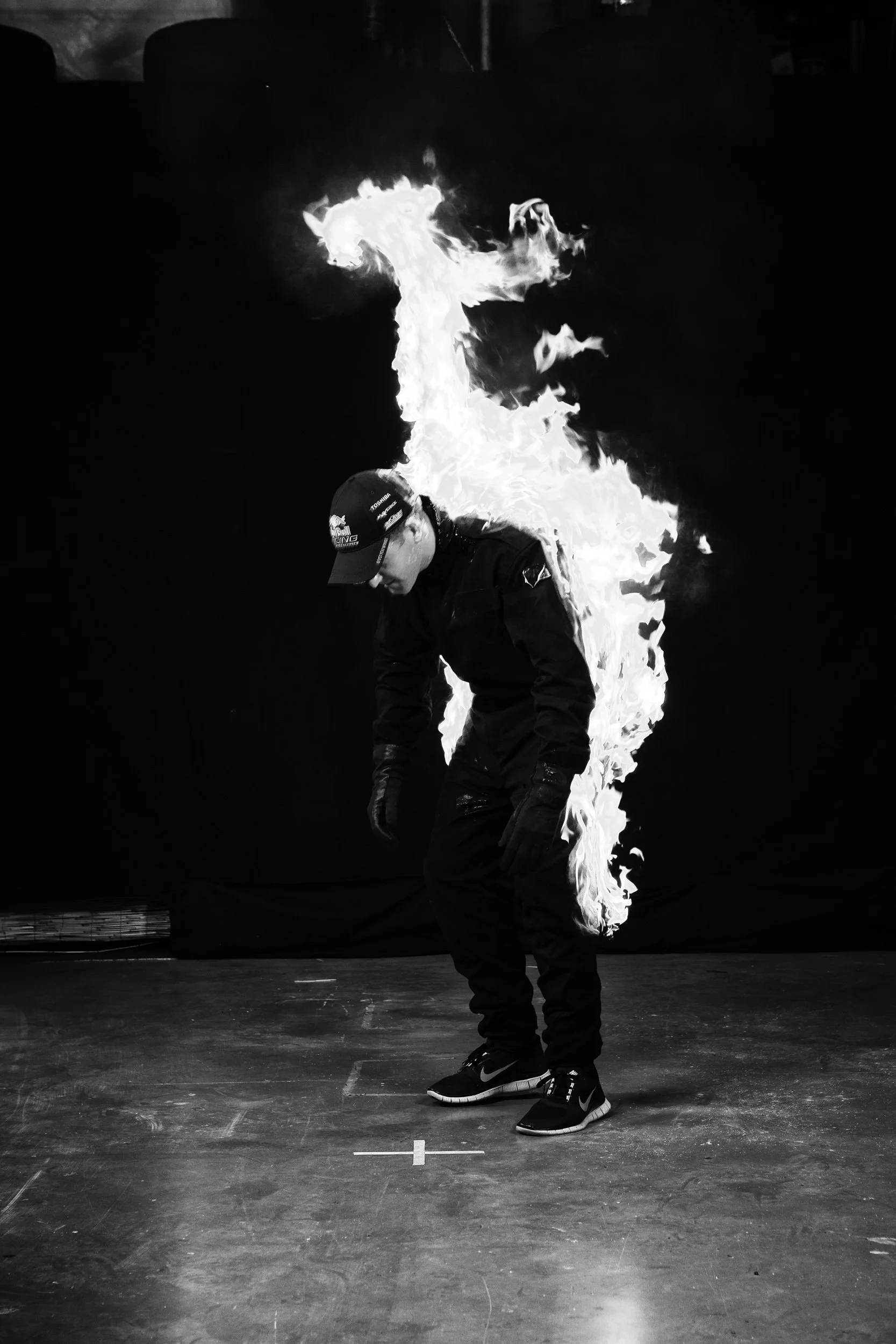
"I want to set Jamie Whincup on fire for a photo."
At first I thought he was joking.
Then I realised he wasn't.
"Whoa... that's a fucking cool idea."
Back in 2013, Jamie was at the absolute peak of his career. He'd already won four Supercars Championships and was well on his way to becoming one of the sport's all-time greats. If we were going to photograph Australia's best touring car driver on fire, it couldn't look like a Photoshop composite. It had to be real.
The Preparation
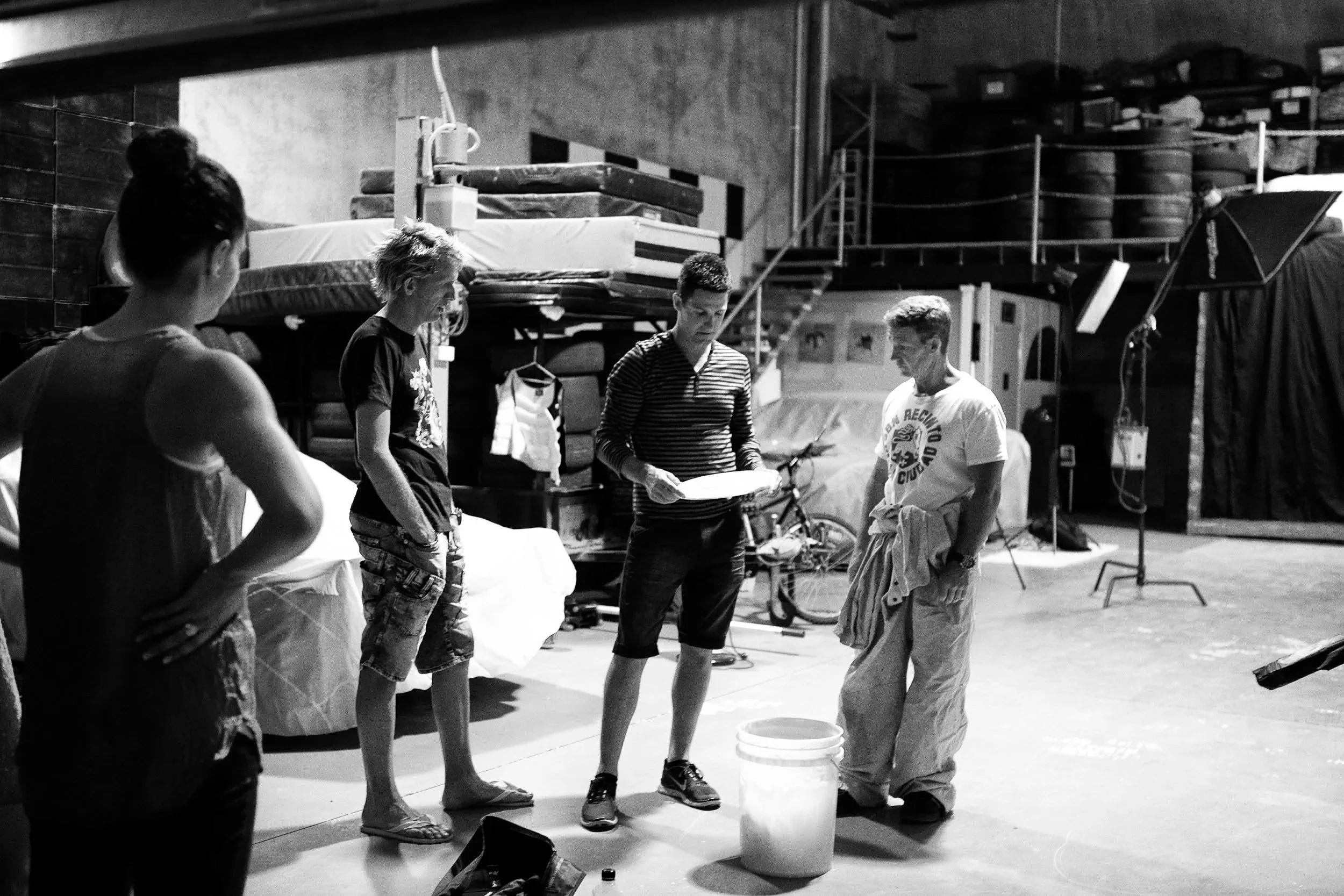
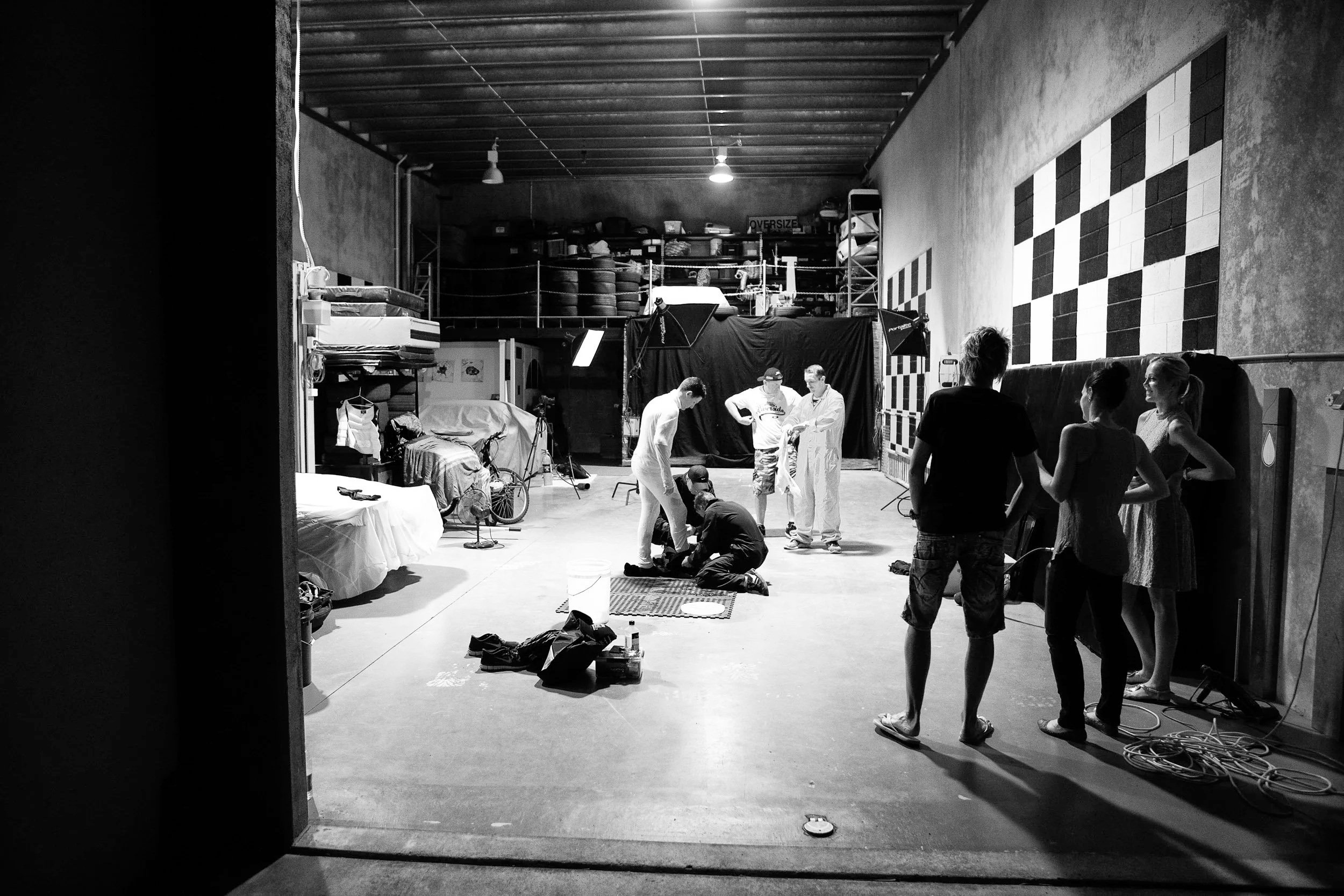
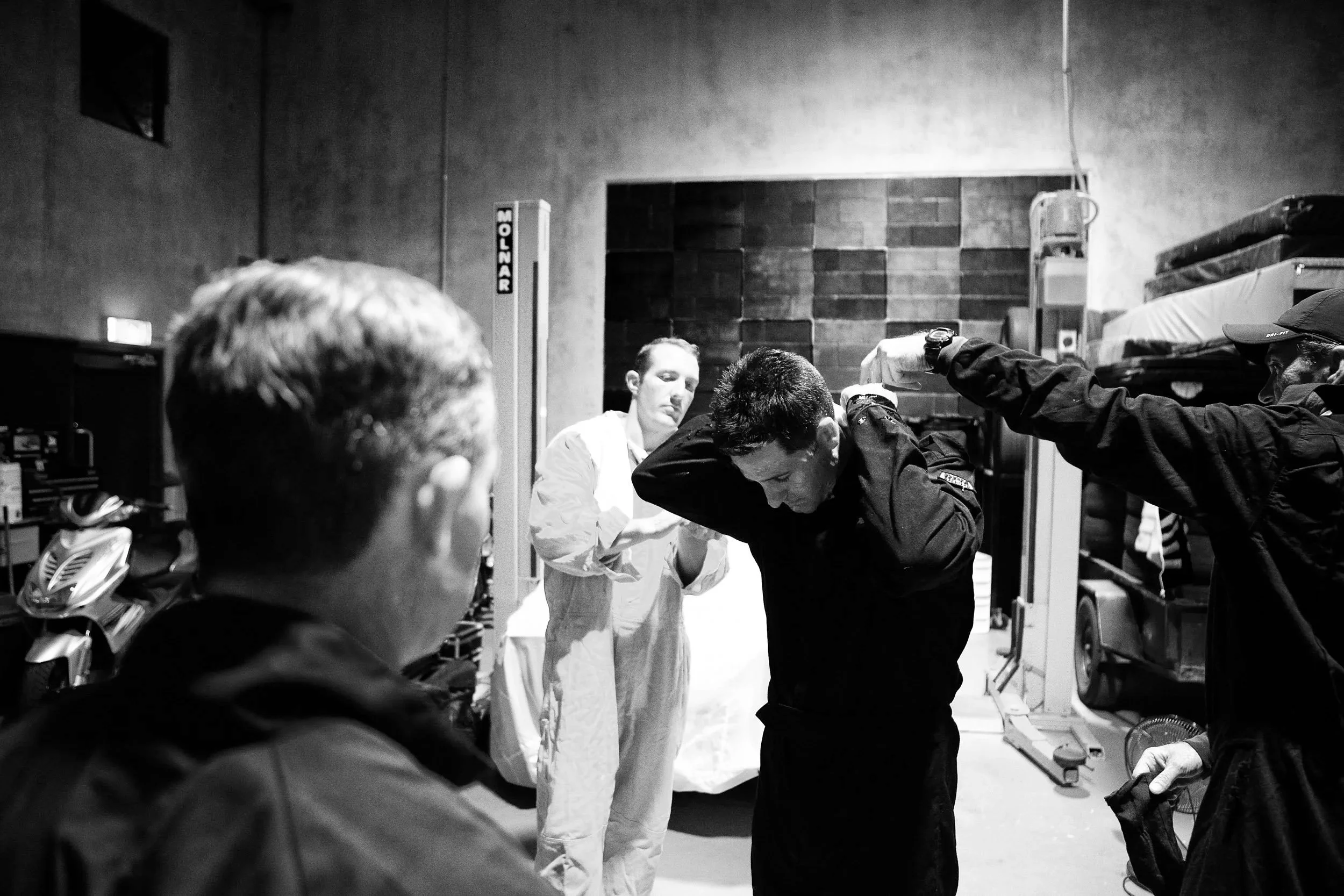
A week later I found myself in a nondescript industrial shed not far from Harbour Town on the Gold Coast. The shed was stacked with crash mats, spare tyres, stunt gear and, thankfully, plenty of fire extinguishers.
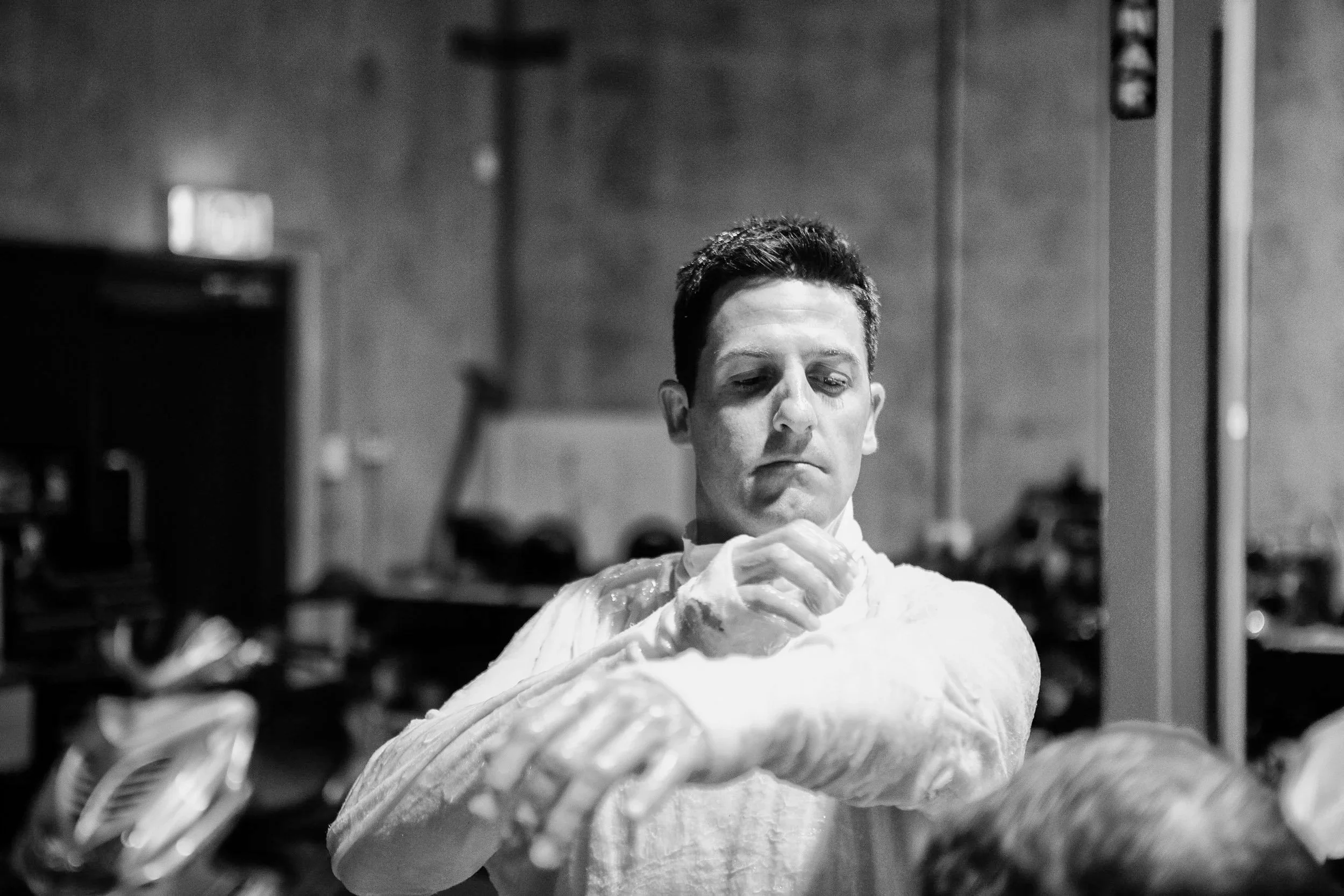
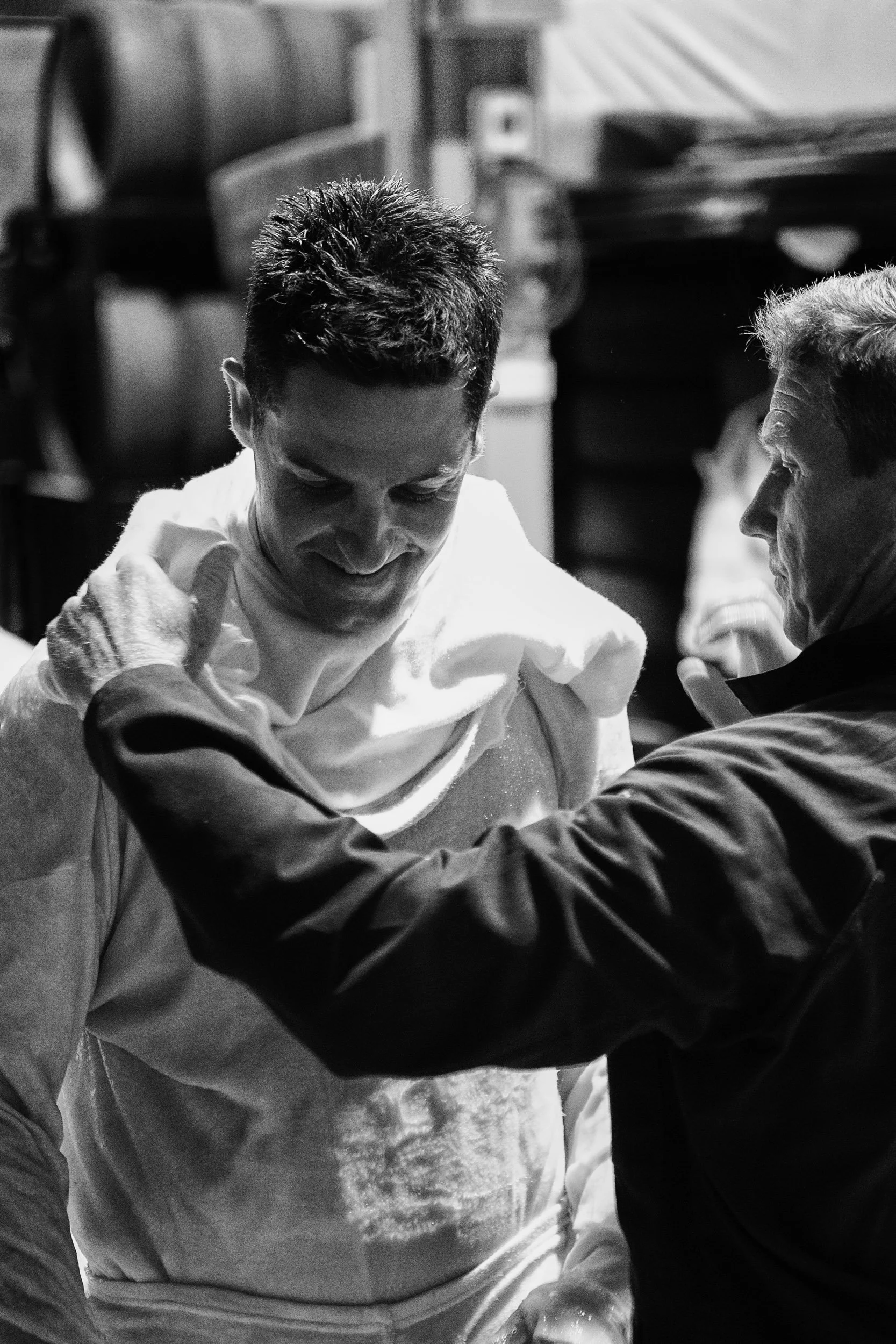
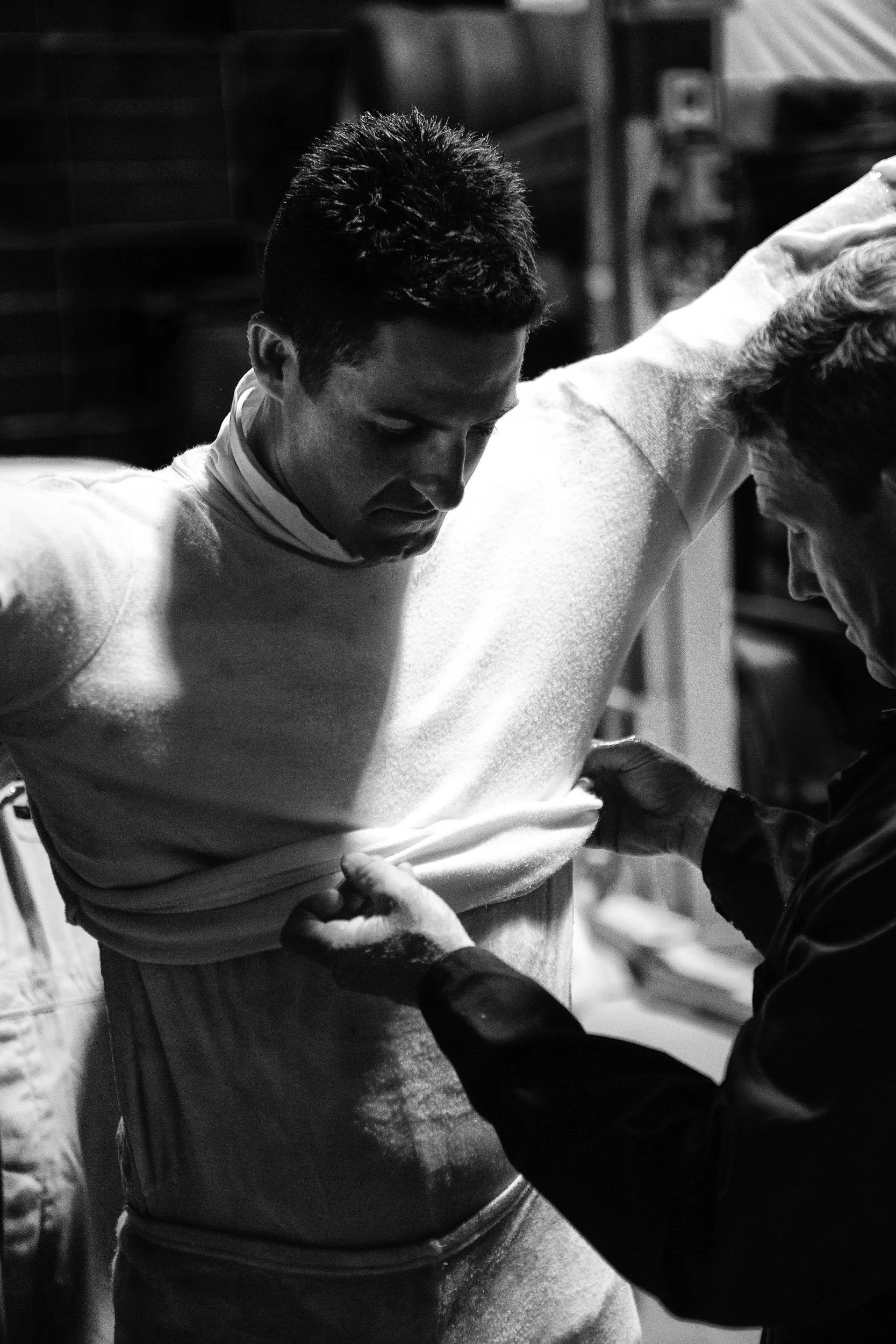
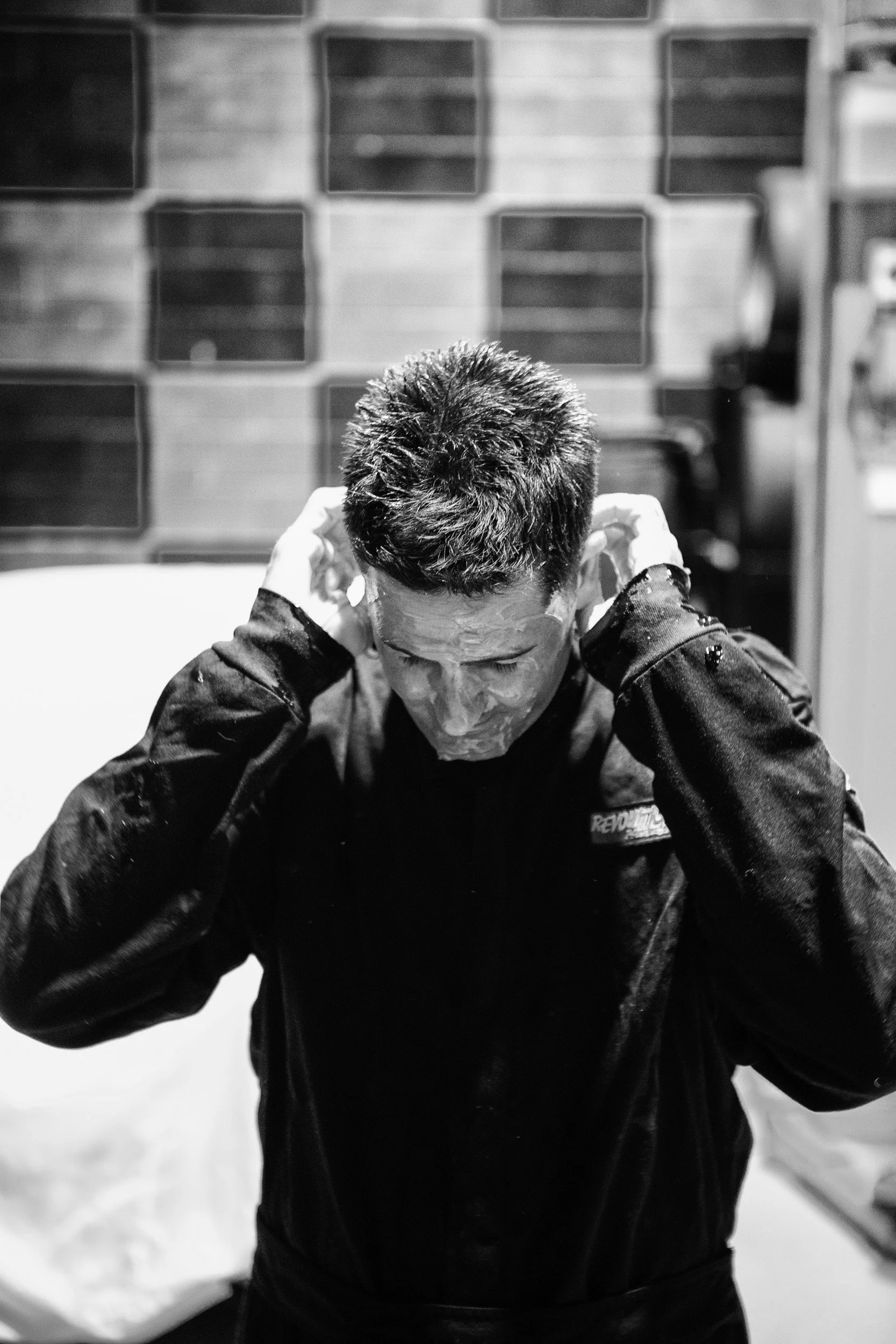
The original plan was for Jamie to wear his genuine Red Bull Racing suit, but sacrificing an expensive race suit for a magazine shoot wasn't exactly practical. Instead, we used a generic race suit with the branding blacked out, while a standard Red Bull cap would just have to do for marketing.
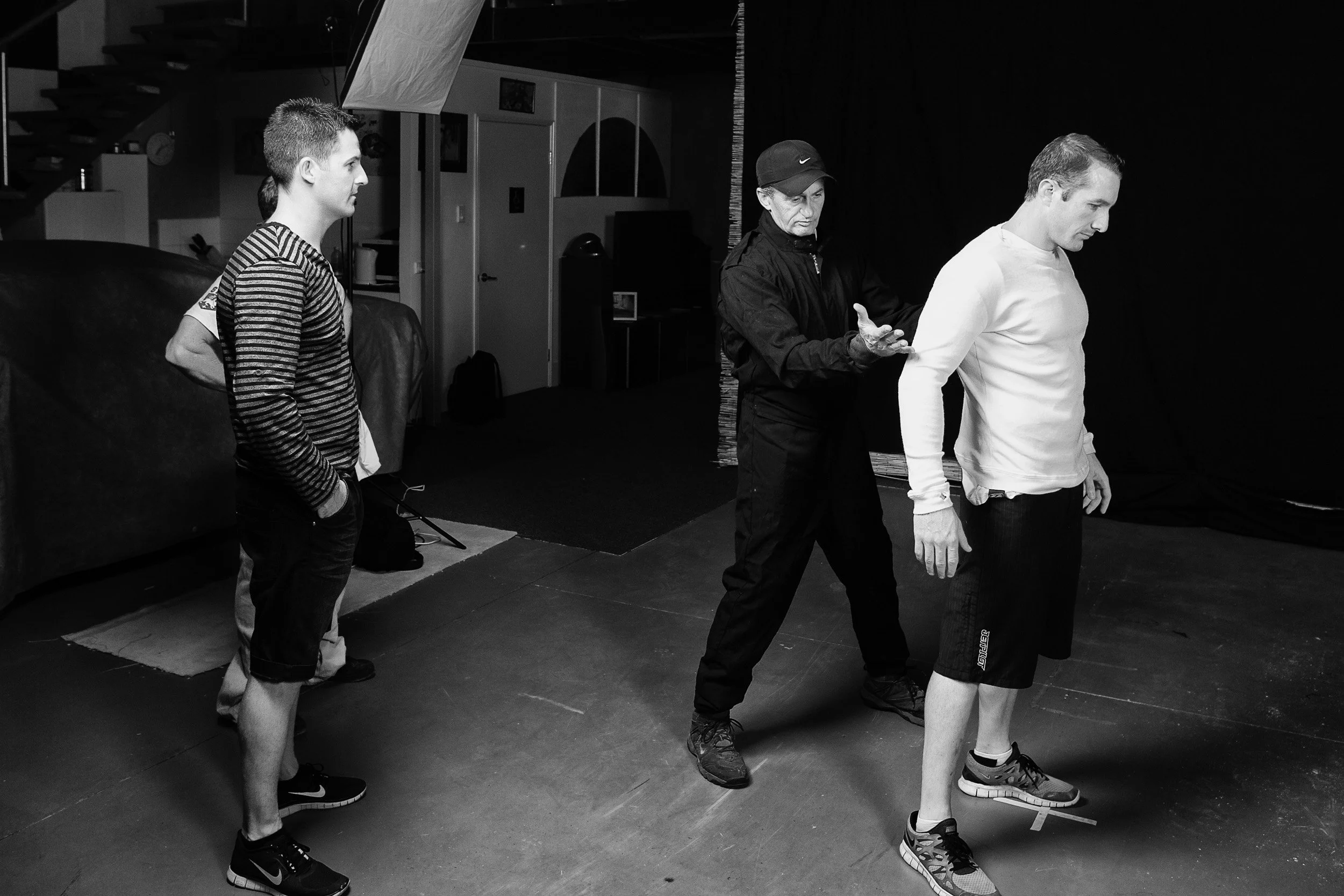
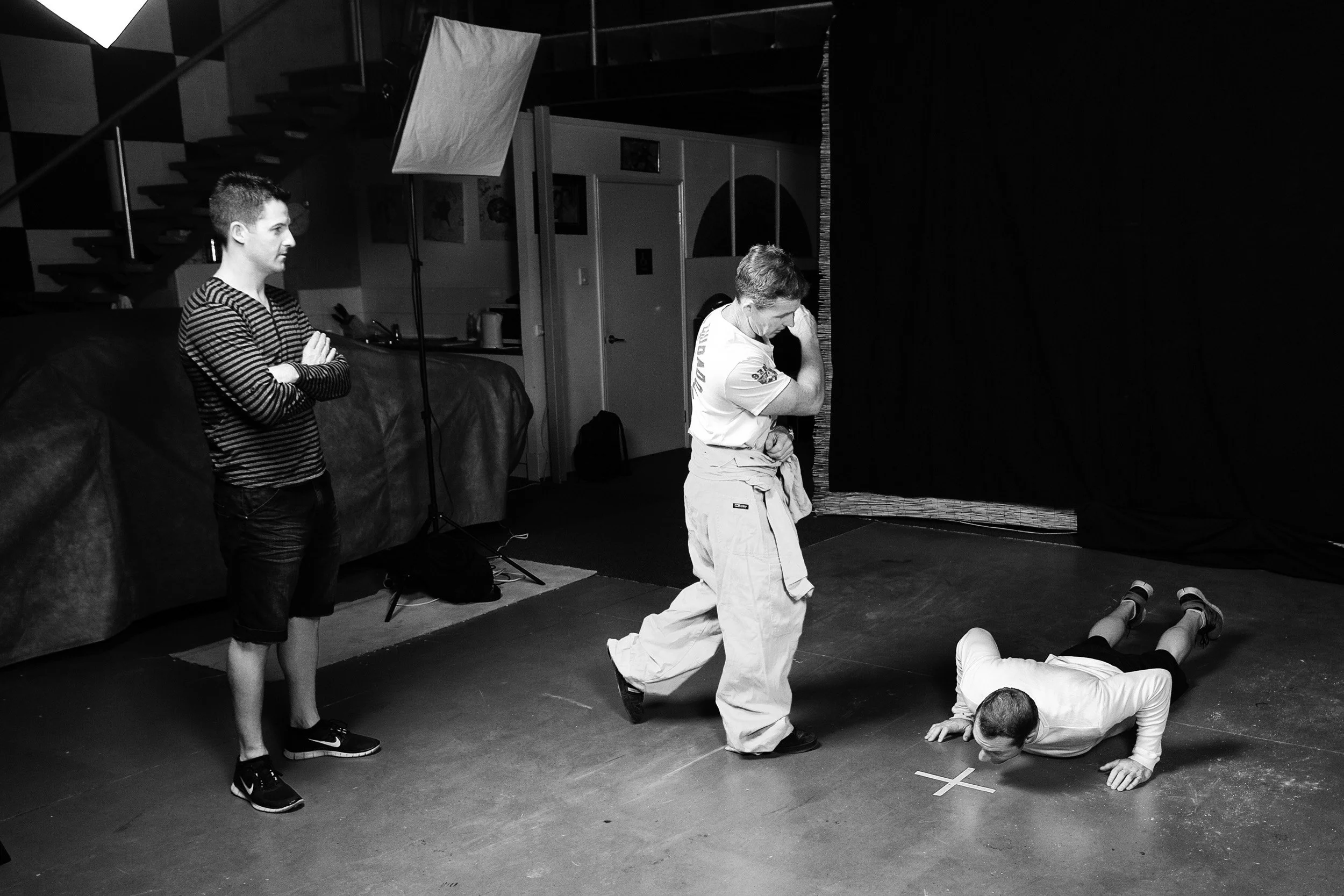
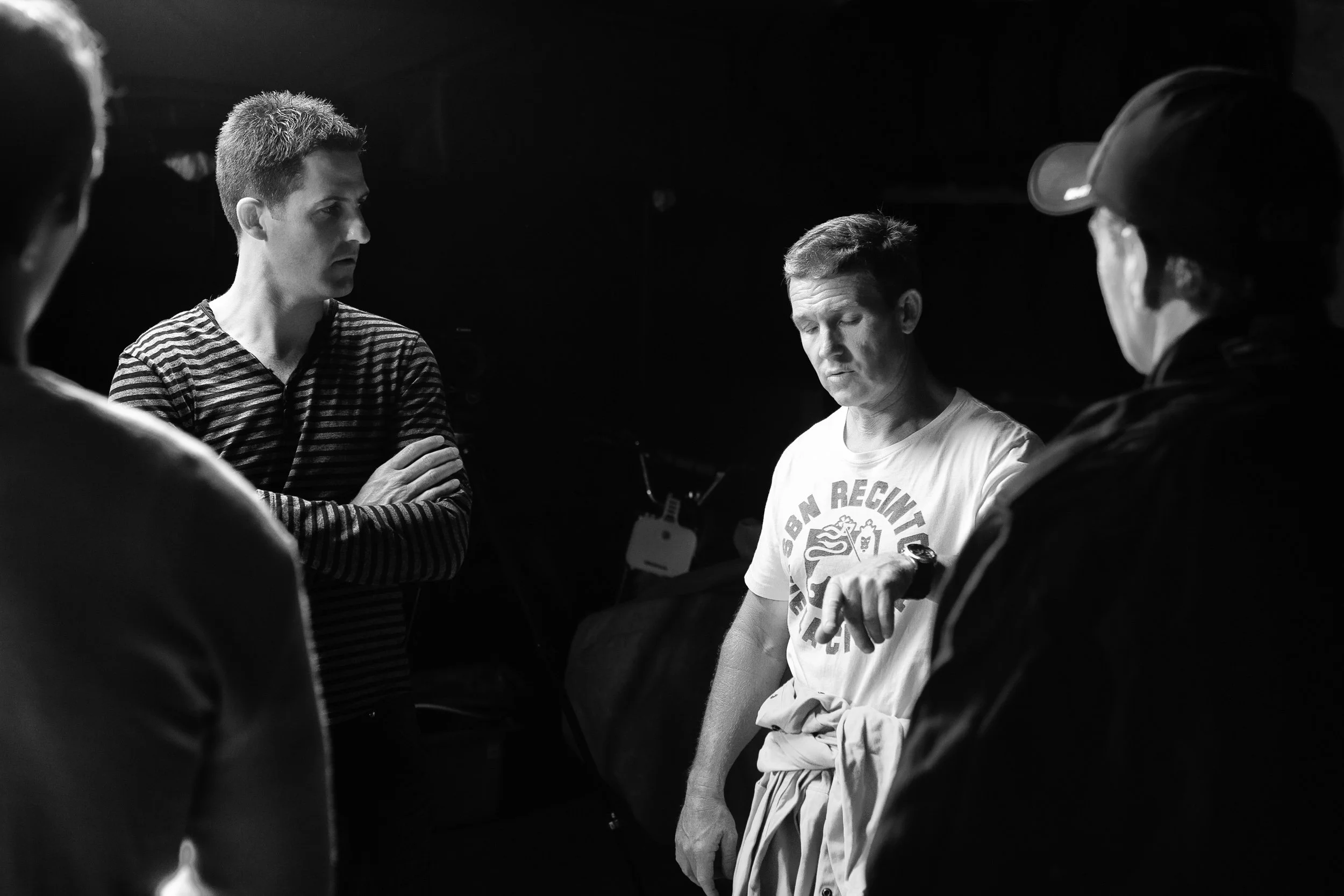
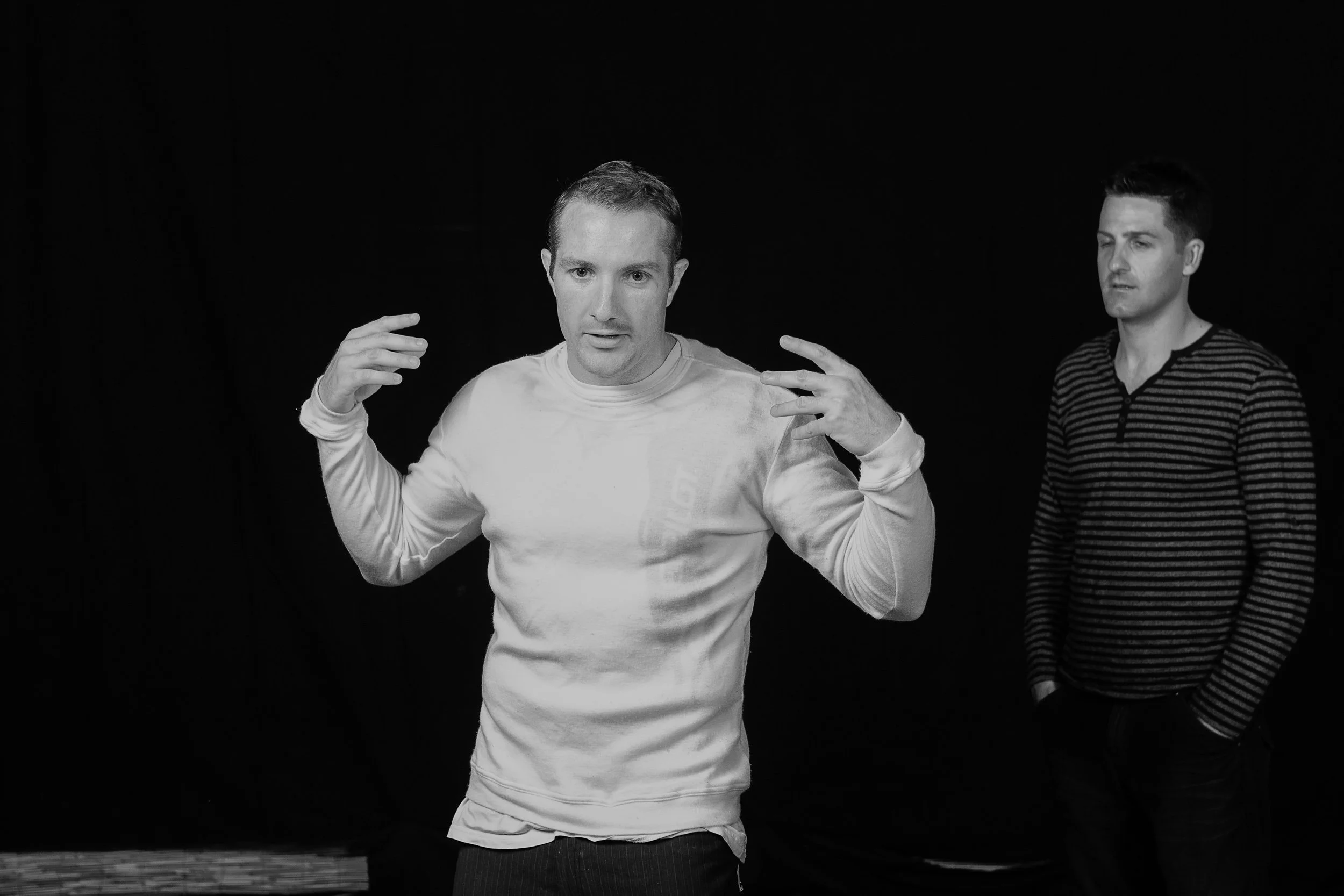
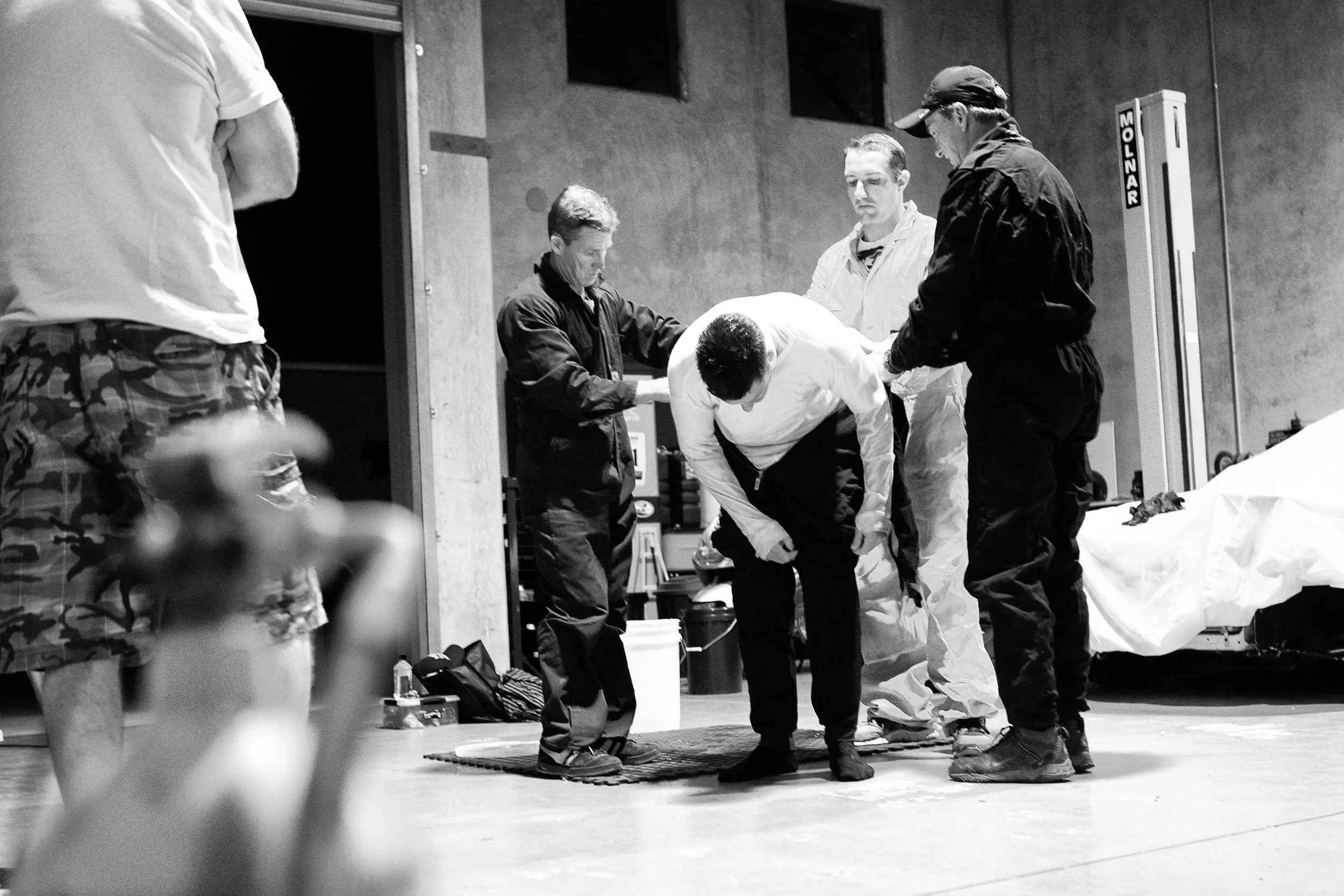
The stunt crew, who also ran the old Police Academy Stunt Show at Movie World, handled every aspect of the stunt and safety. We arrived a few hours early to go through the process, rehearse the sequence and make sure everyone knew exactly what was going to happen.
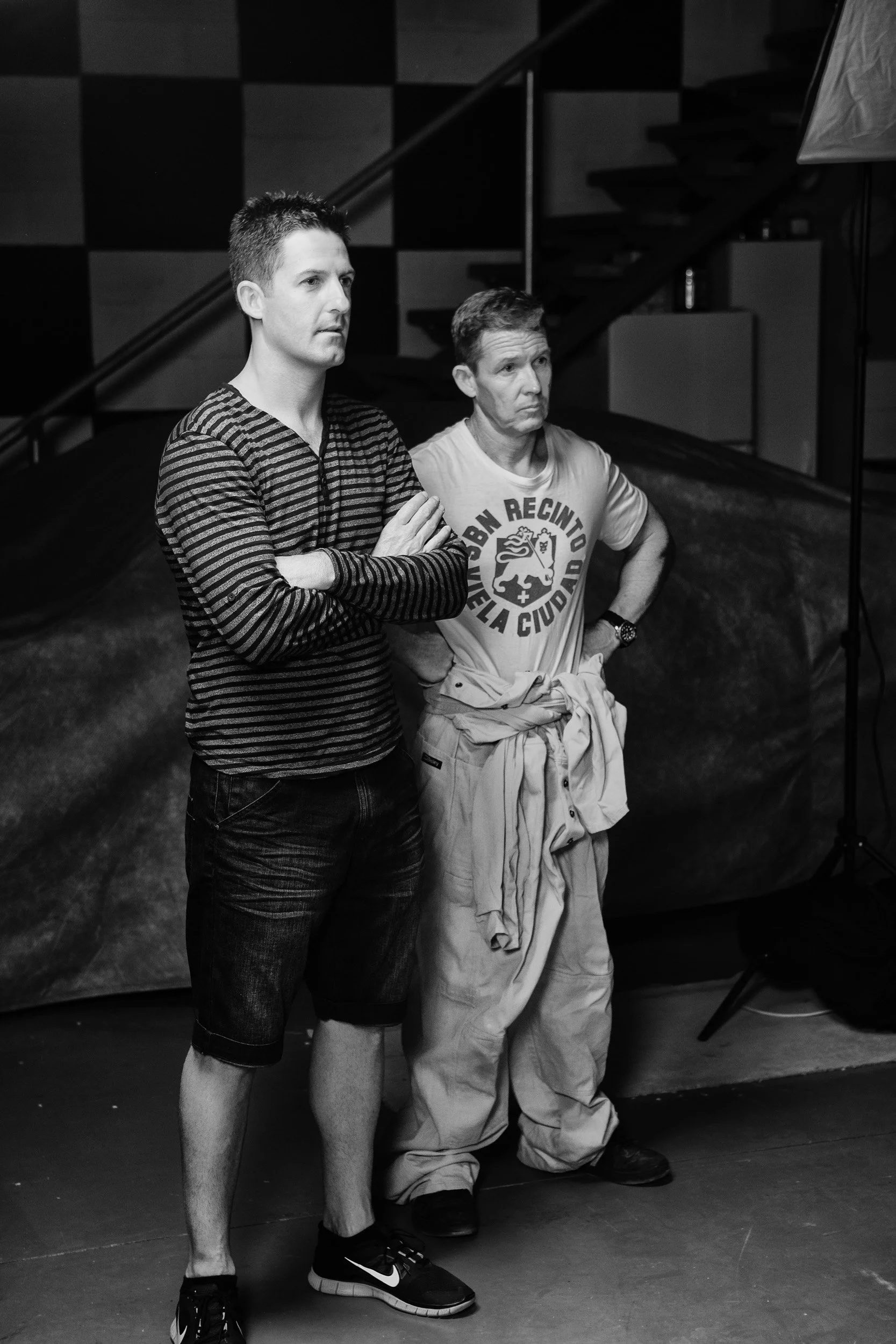
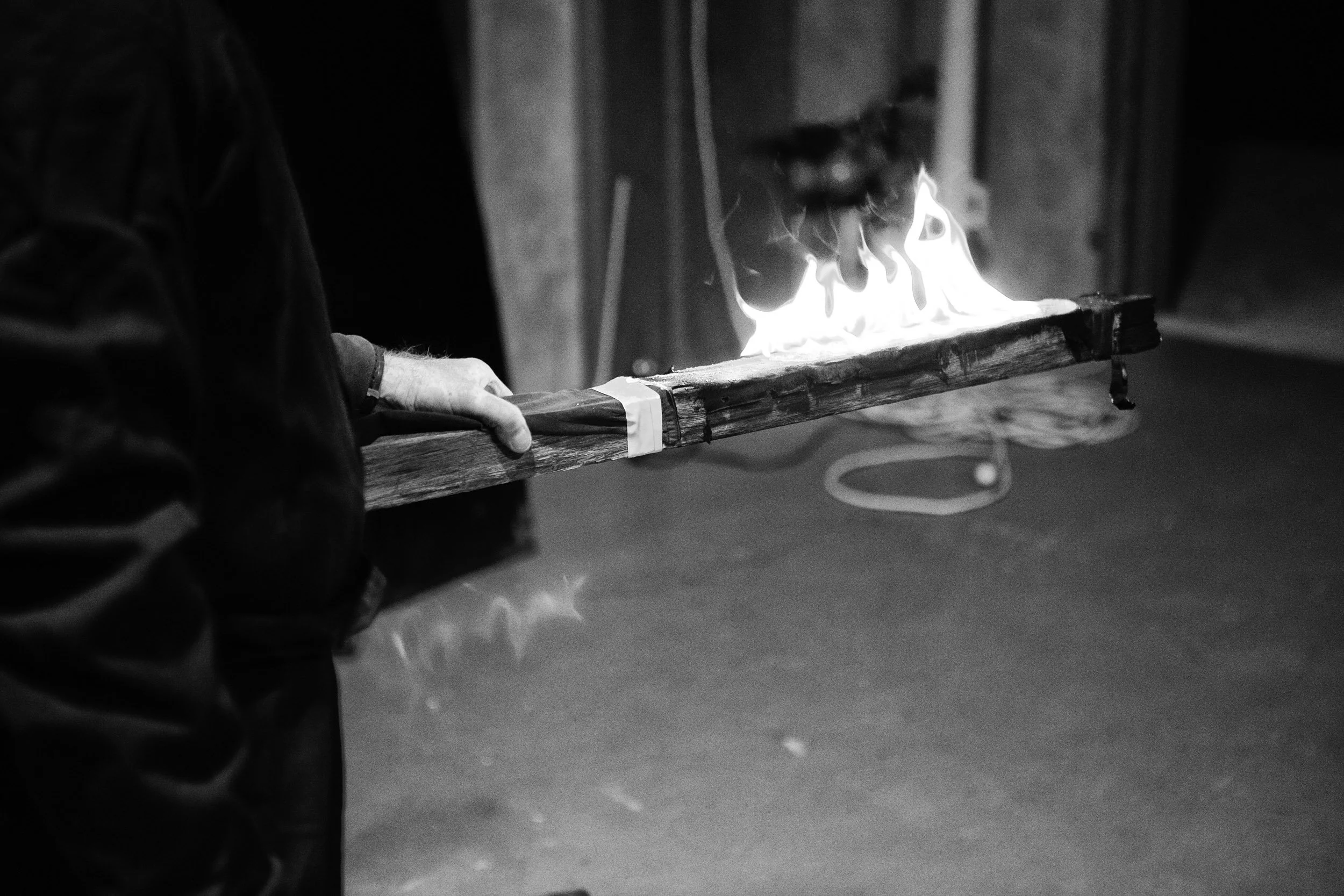
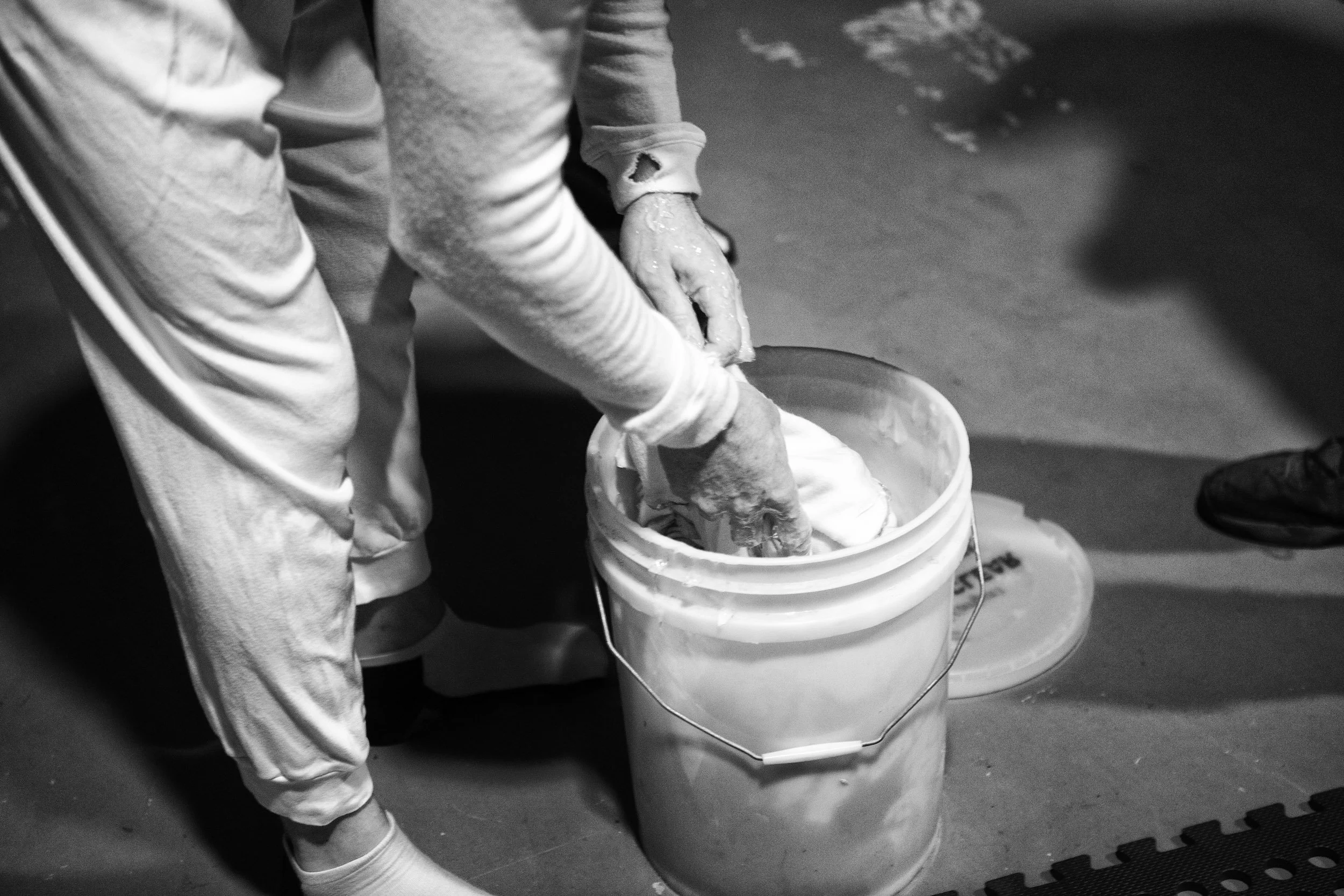
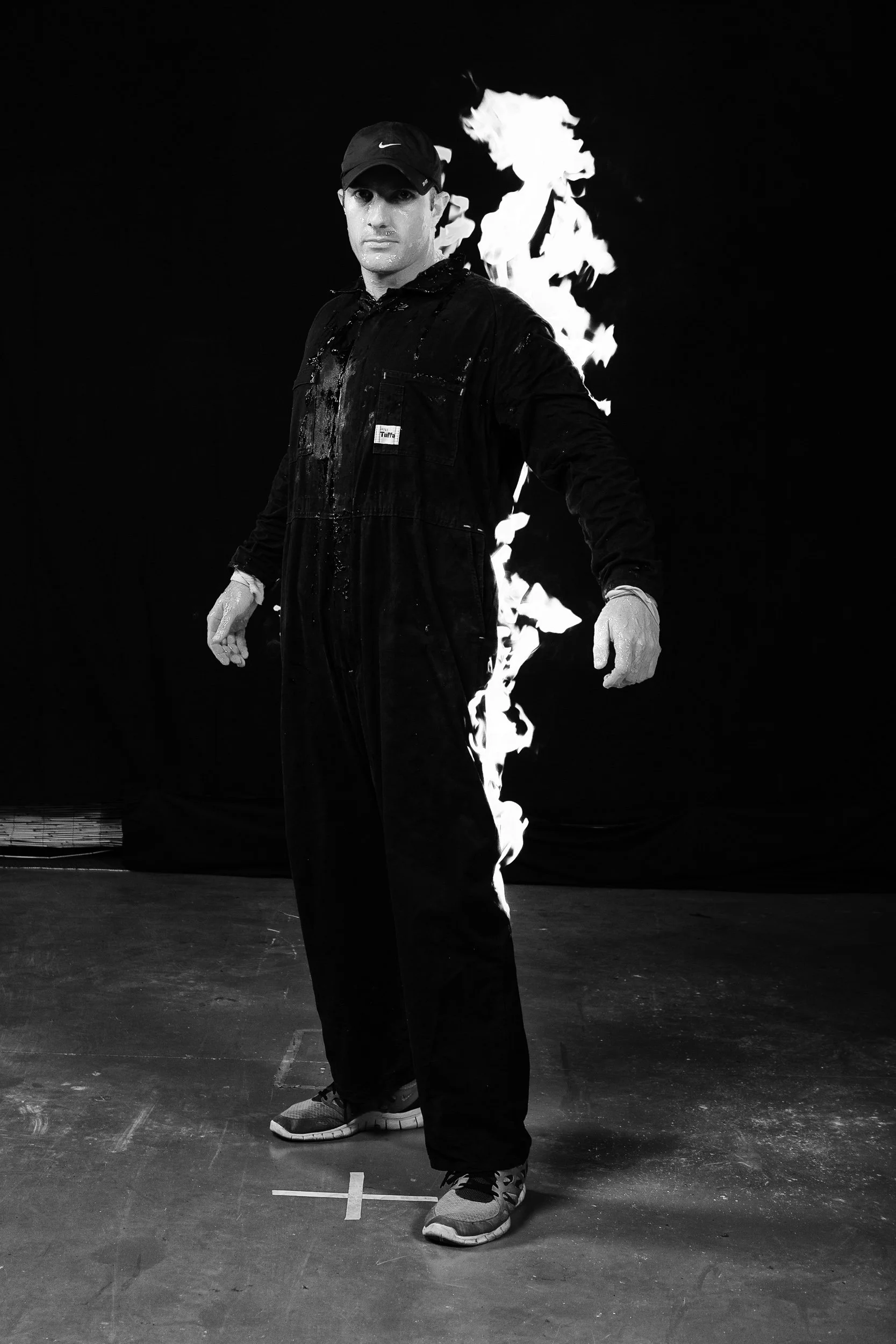
It wasn't until the stunt coordinator walked us through the process that it really dawned on me what I'd signed up for.
I'd never photographed someone on fire before, so in my mind Jamie would simply stand there while I rattled off a few frames.
Of course, that's not how being on fire works.
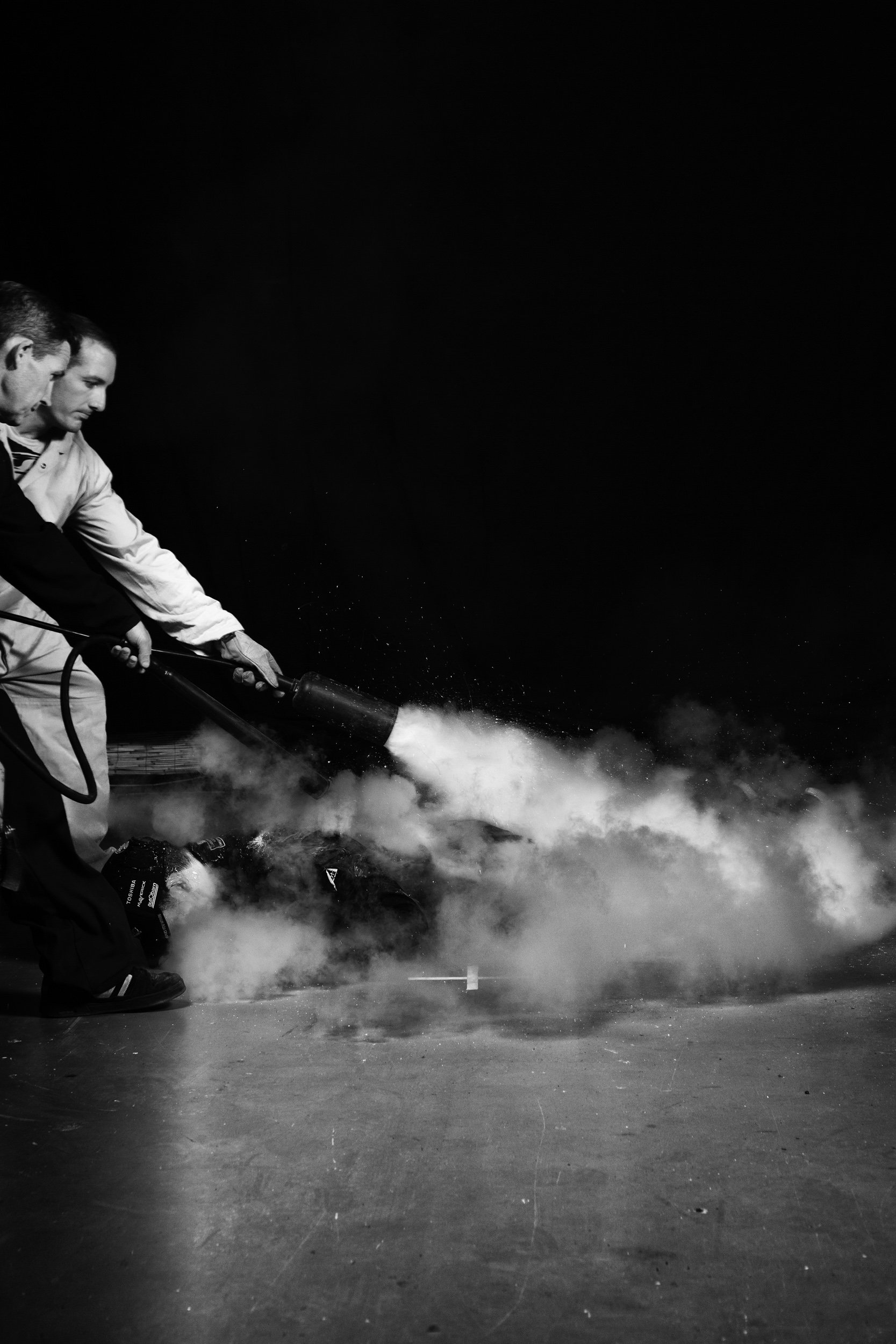
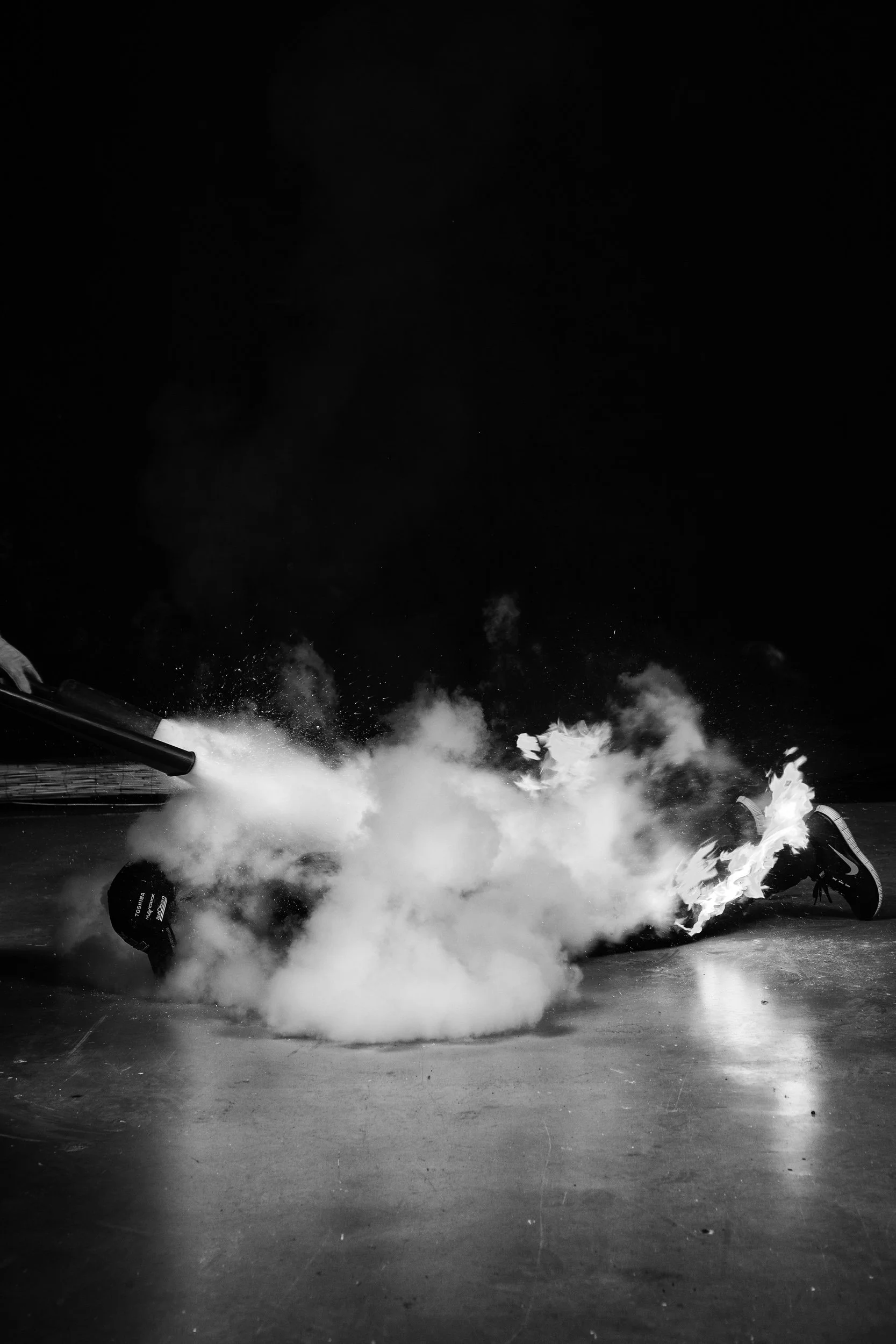
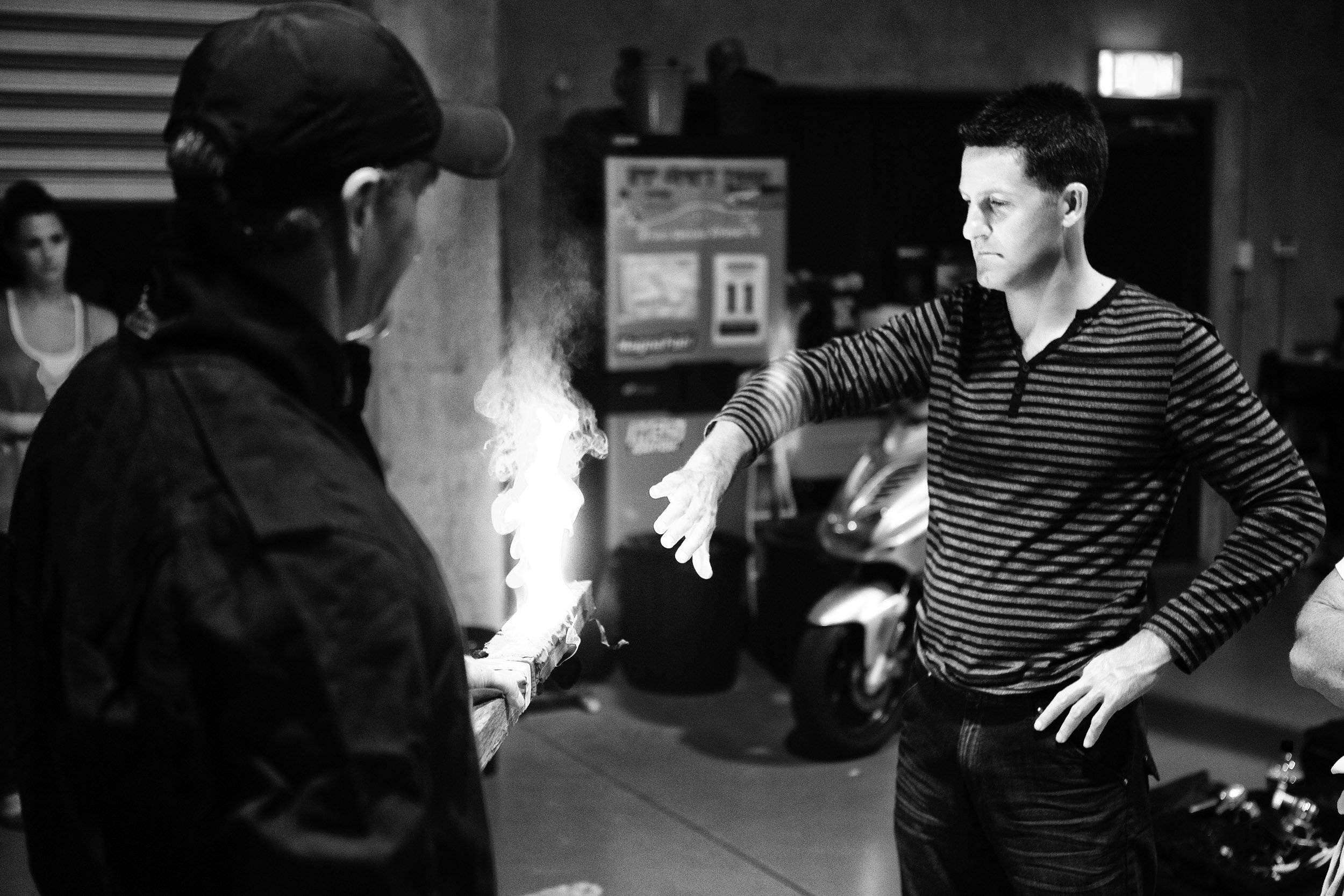
The stuntman demonstrated the routine. He crouched, walked in a slow circle, stood upright for barely a second, then dropped face down to be extinguished. The movement kept the flames away from the back of his neck and head.
That was a little bit of an "oh shit" moment.
Why hadn't I thought of that before? No one stands still while they're on fire. Why the hell did I think Jamie would?
My stomach dropped and my anus puckered a little.
One shot... maybe two if I was lucky.
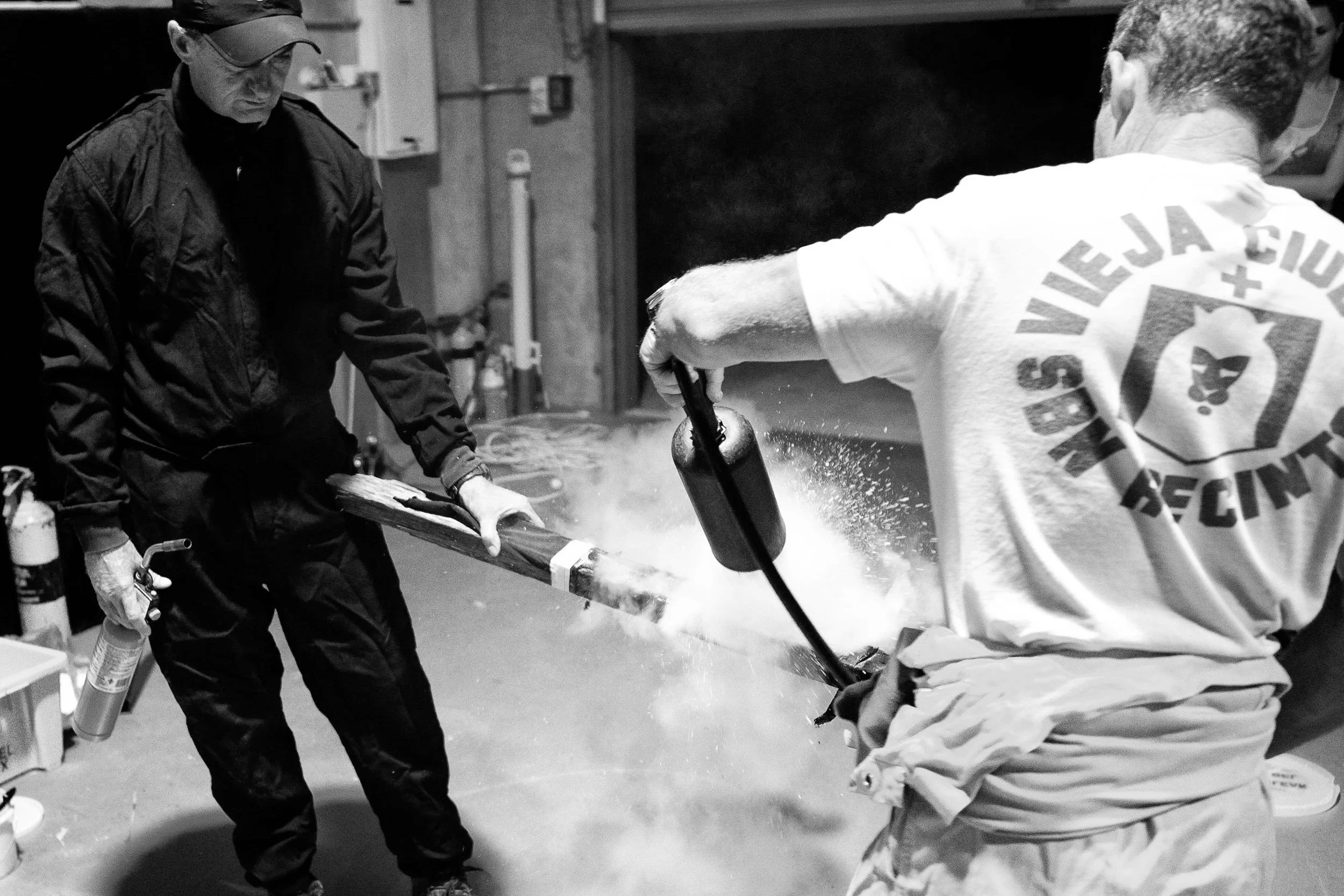
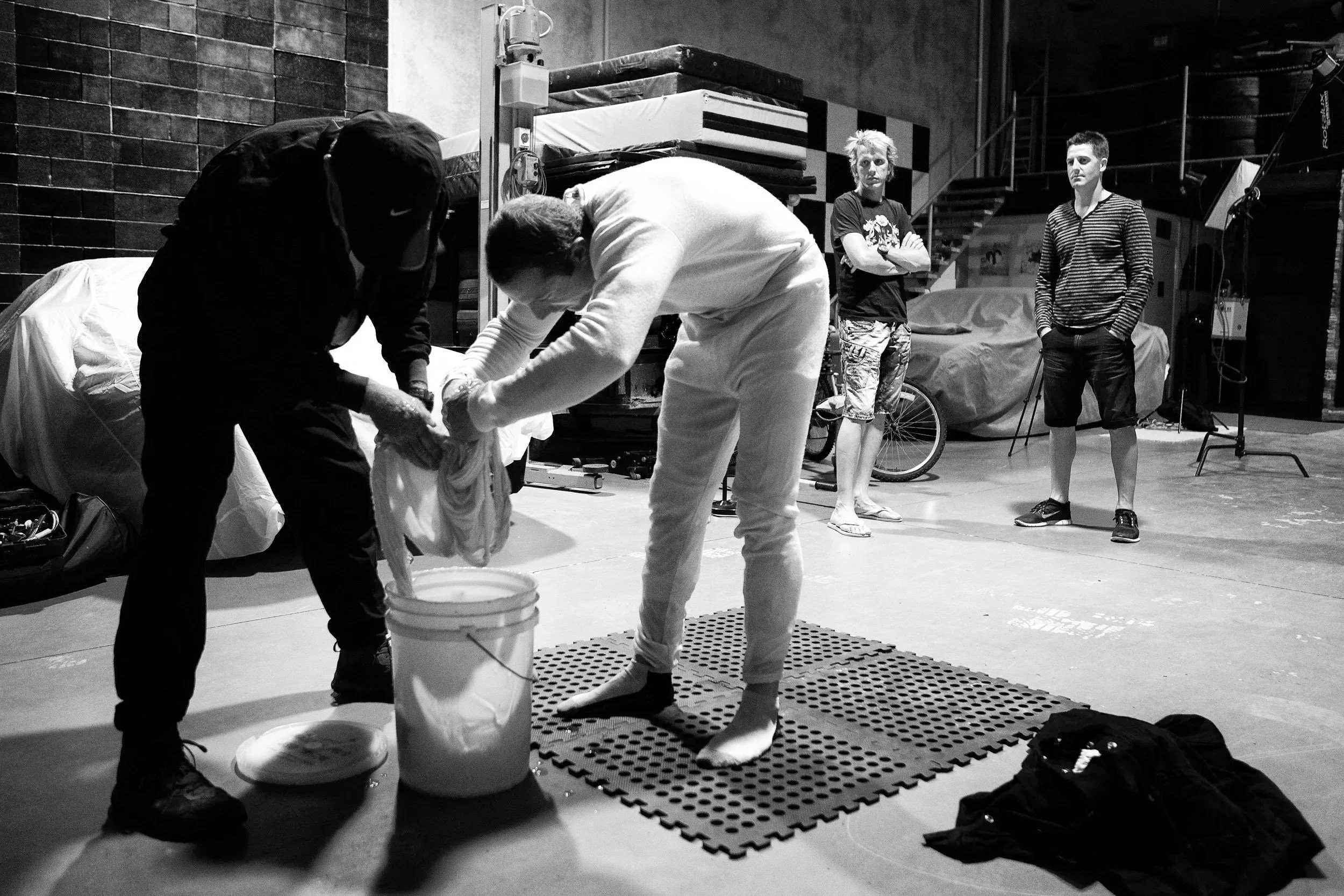
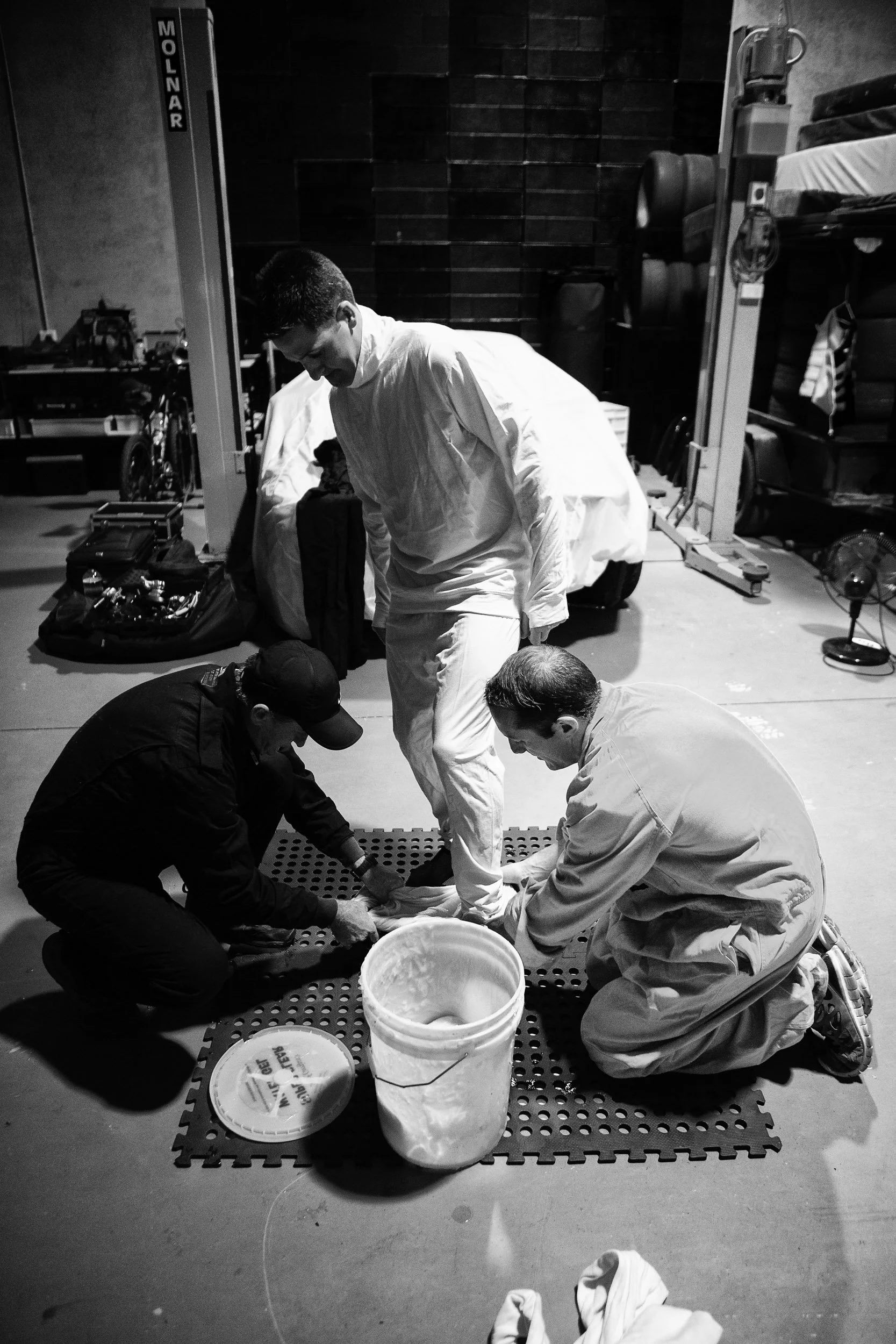
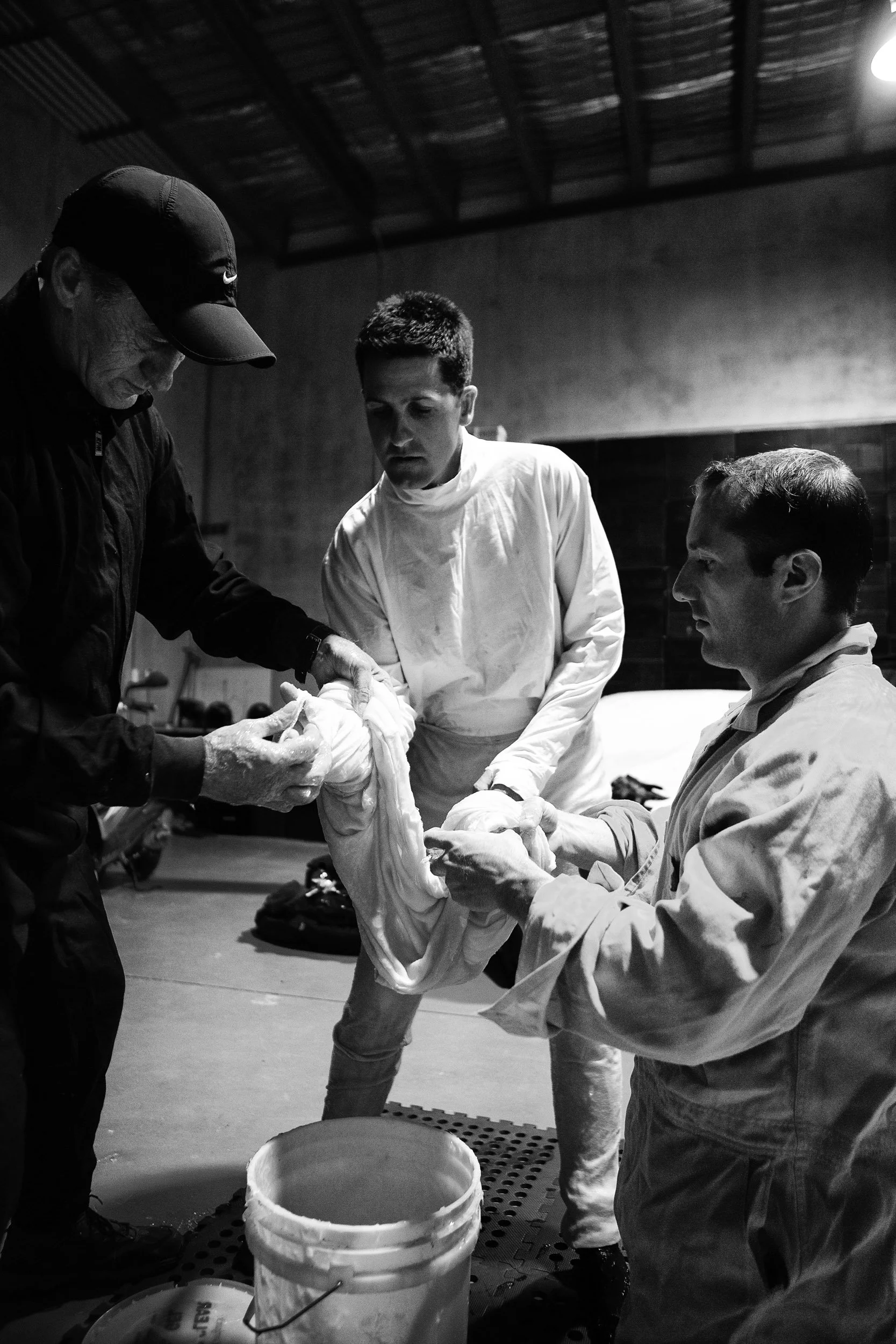
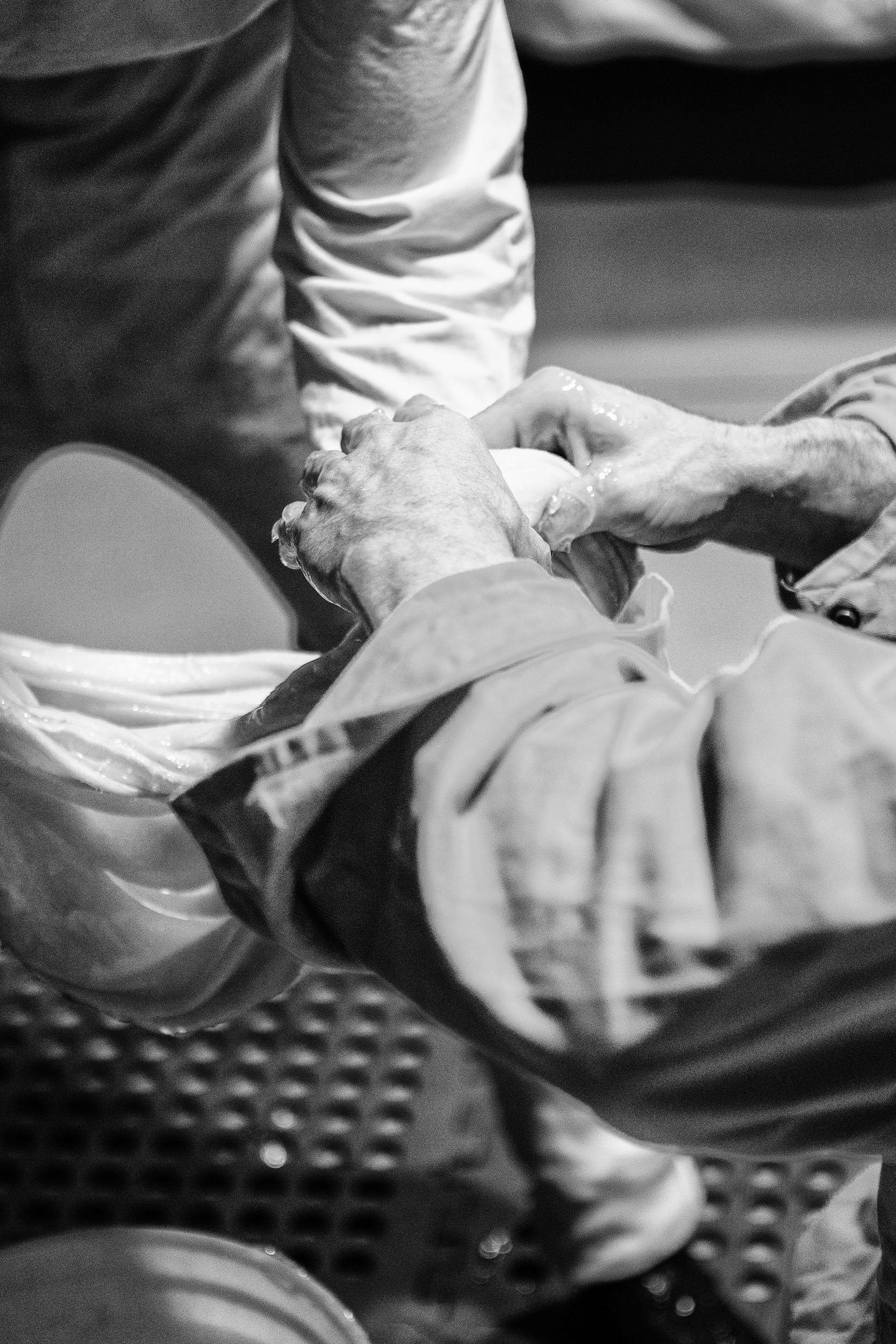
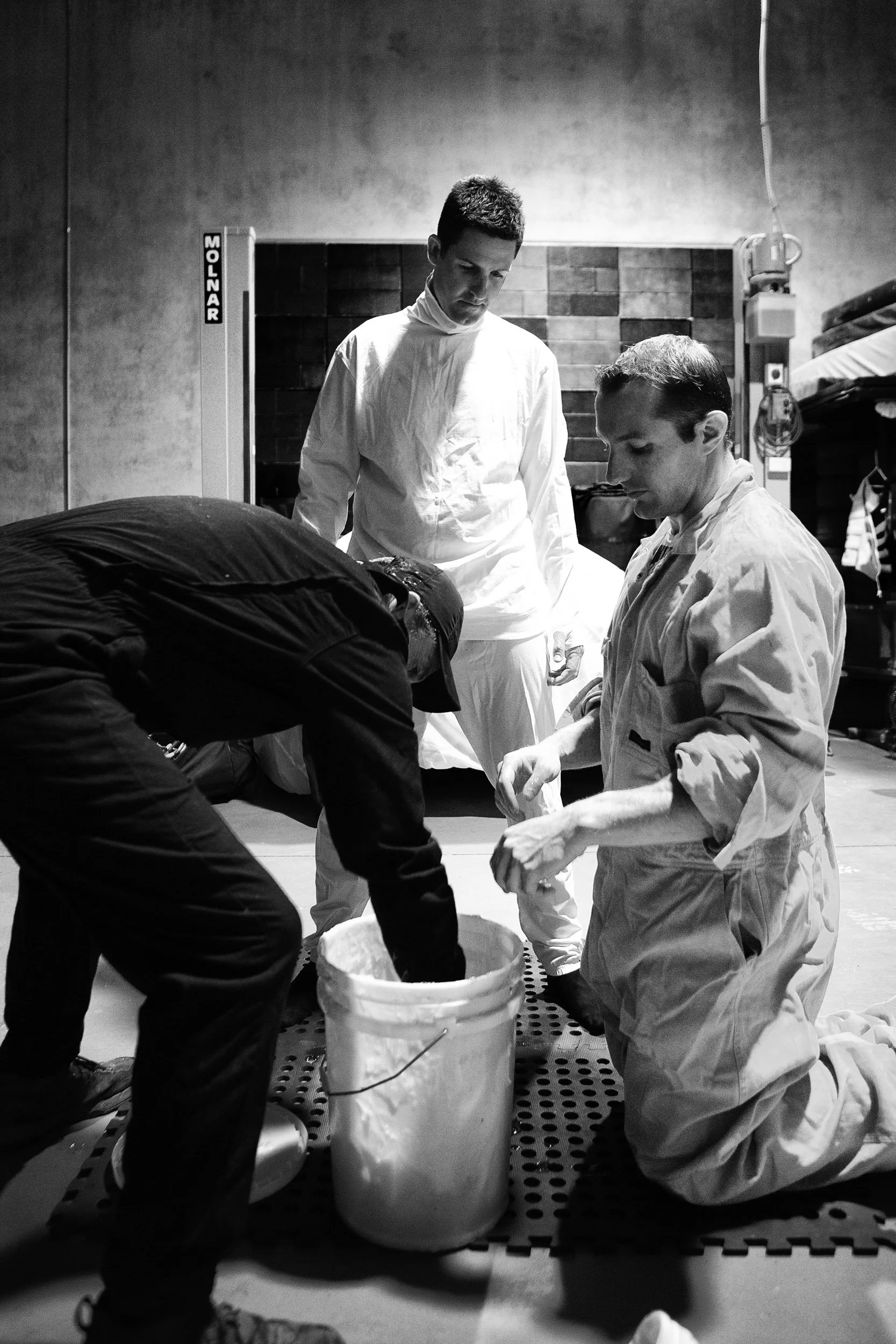
Photographing someone on fire wasn't going to be a spray-and-pray exercise. Every time Jamie stood upright I'd have about half a second to make the shot before he had to move again.
The rehearsal ended up being the super valuable - It gave me the chance to dial in the lighting, lock in my exposure and manually focus on the exact spot where Jamie would hit his mark. There was no way I was leaving a single shot up to autofocus.
Sometimes photography is 99% preparation and 1% luck - I'm always on the lookout for that one variable that's going to trip me up, and this shoot had plenty of them.
Jamie was understandably a little nervous, but he was exactly what you'd expect from a champion. Calm, focused and completely professional.
The Shoot
Technology in 2013 wasn't what it is today.
My Elinchrom Ranger strobe needed around a second to recycle at the power I was using. Jamie could only safely hold his pose for about of that time. Every time he stood upright I got one frame. Not five. Not ten. One.
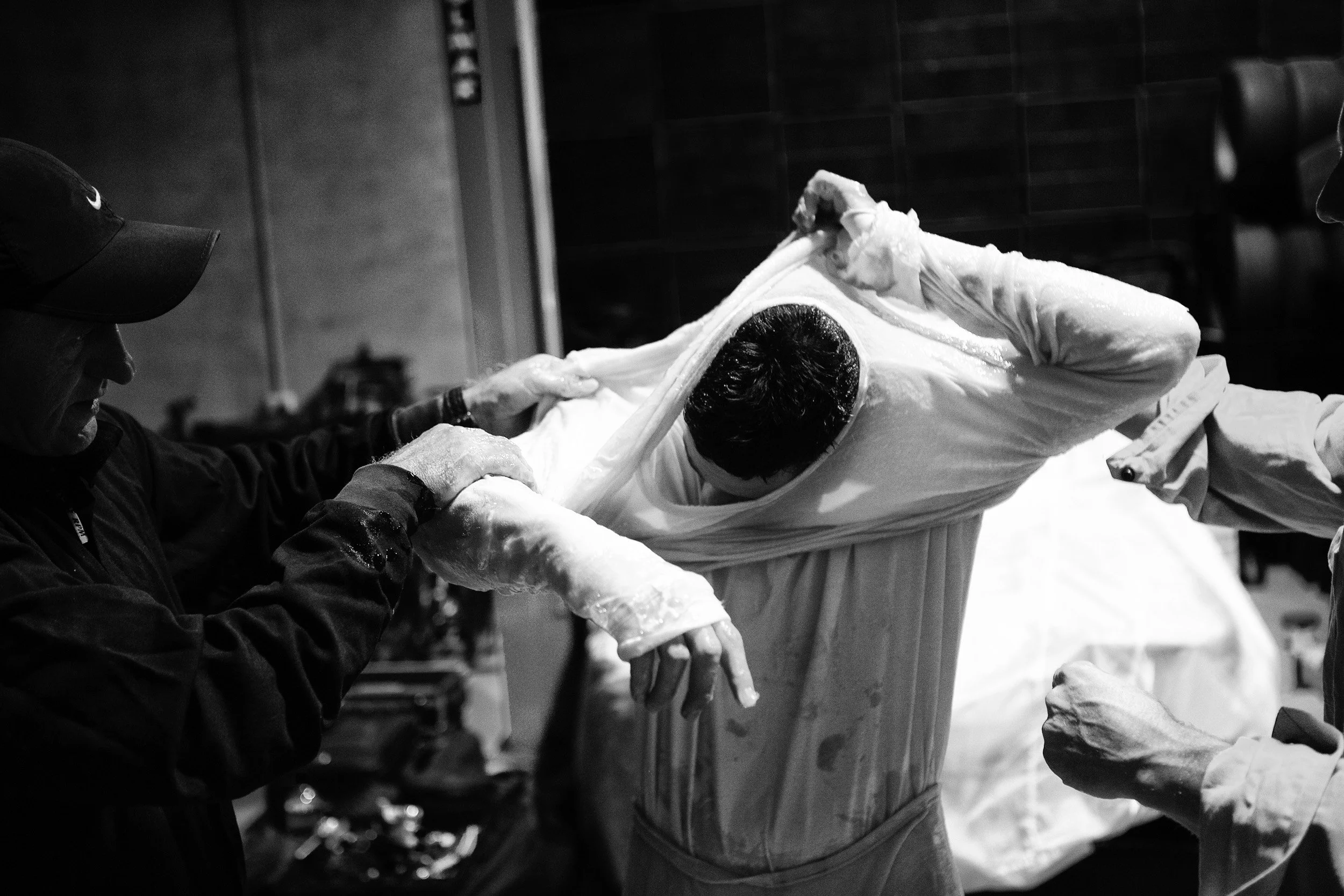
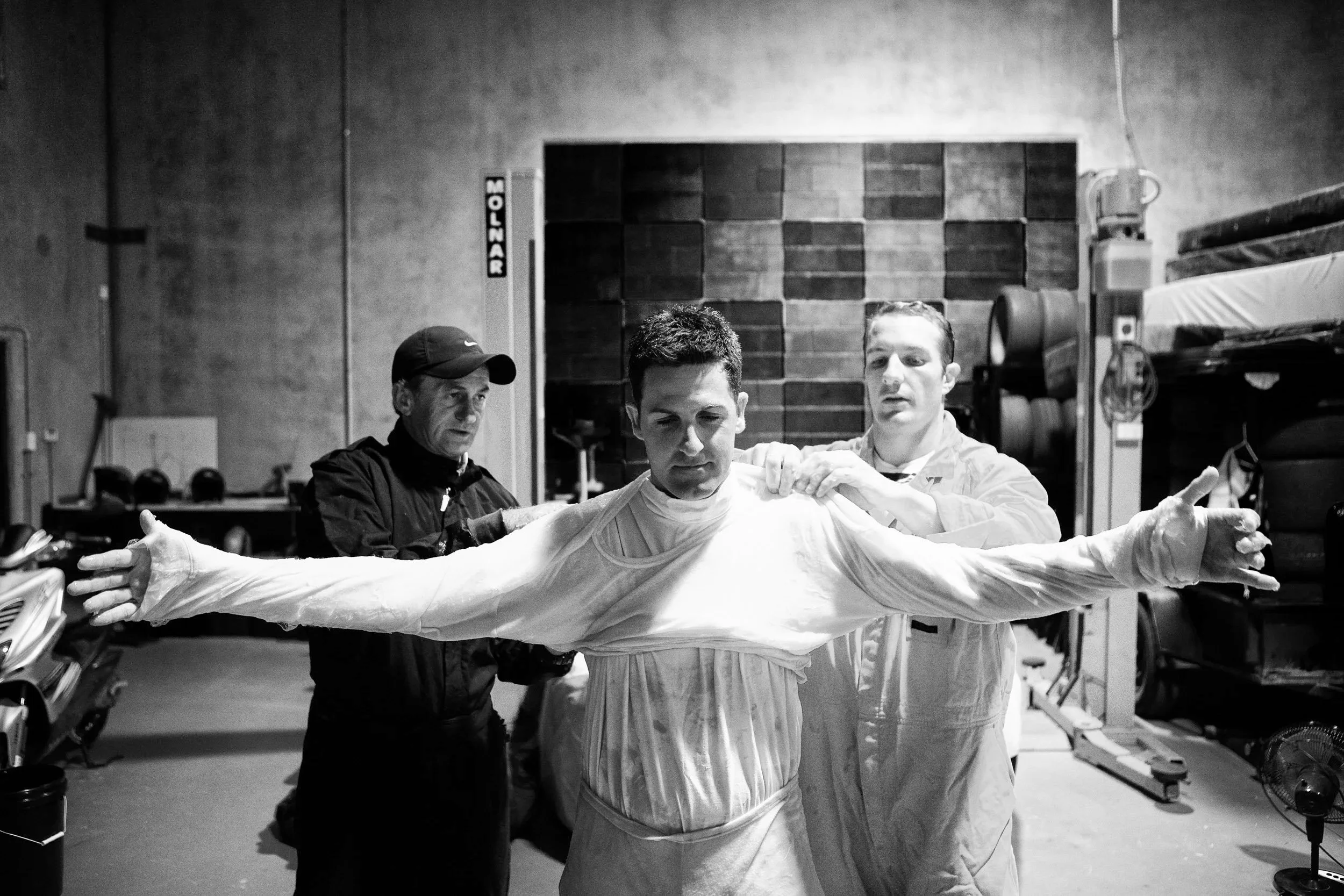
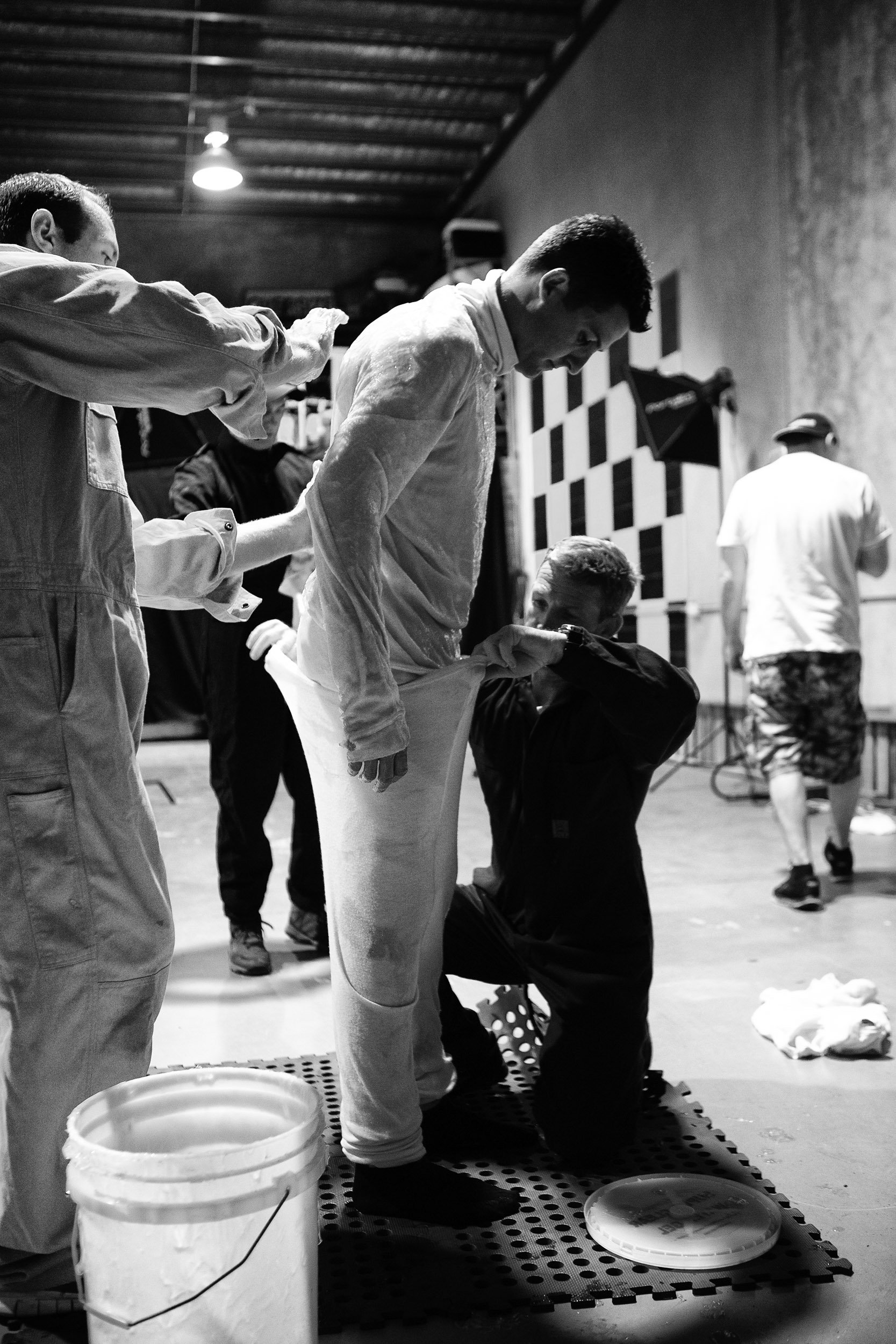
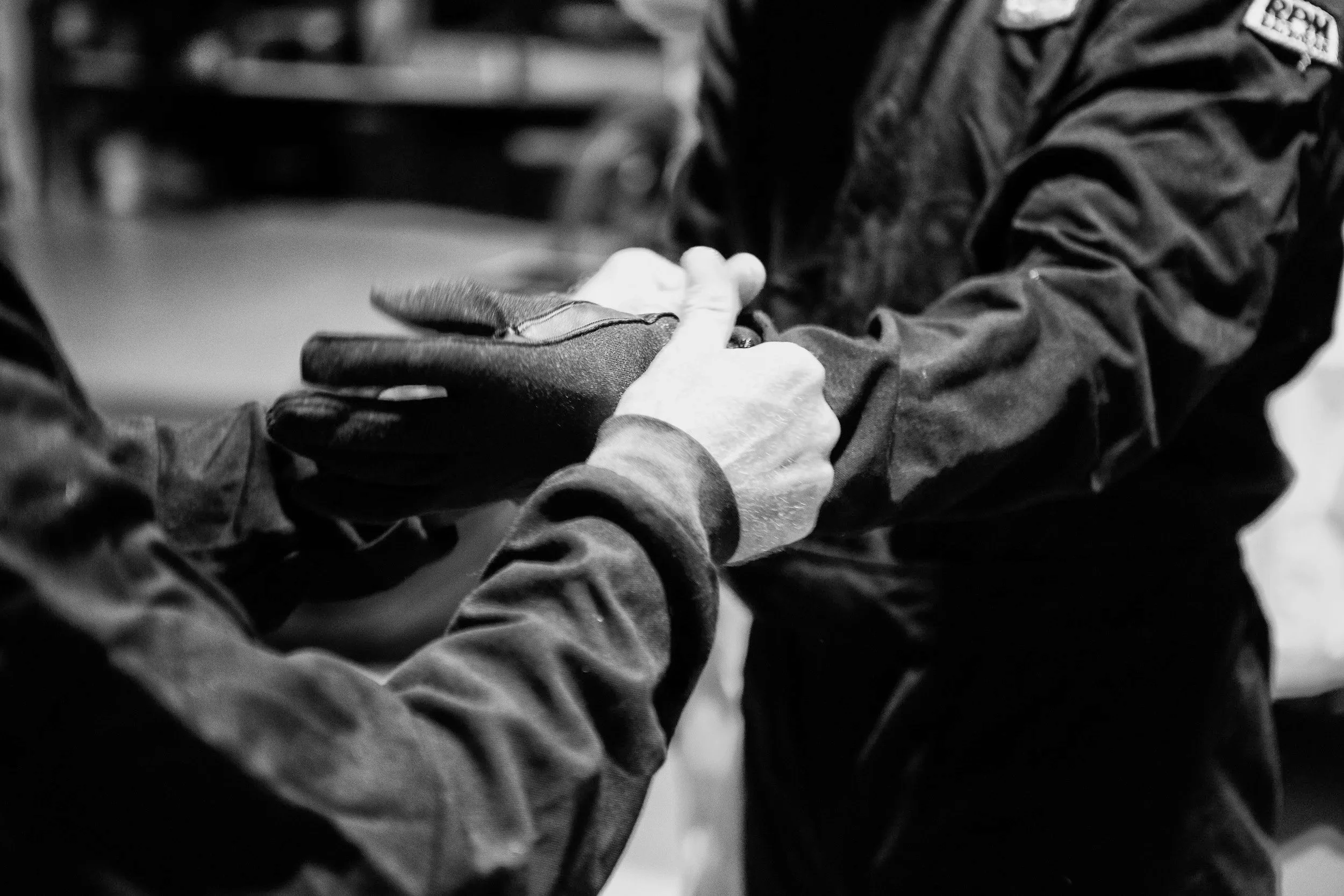
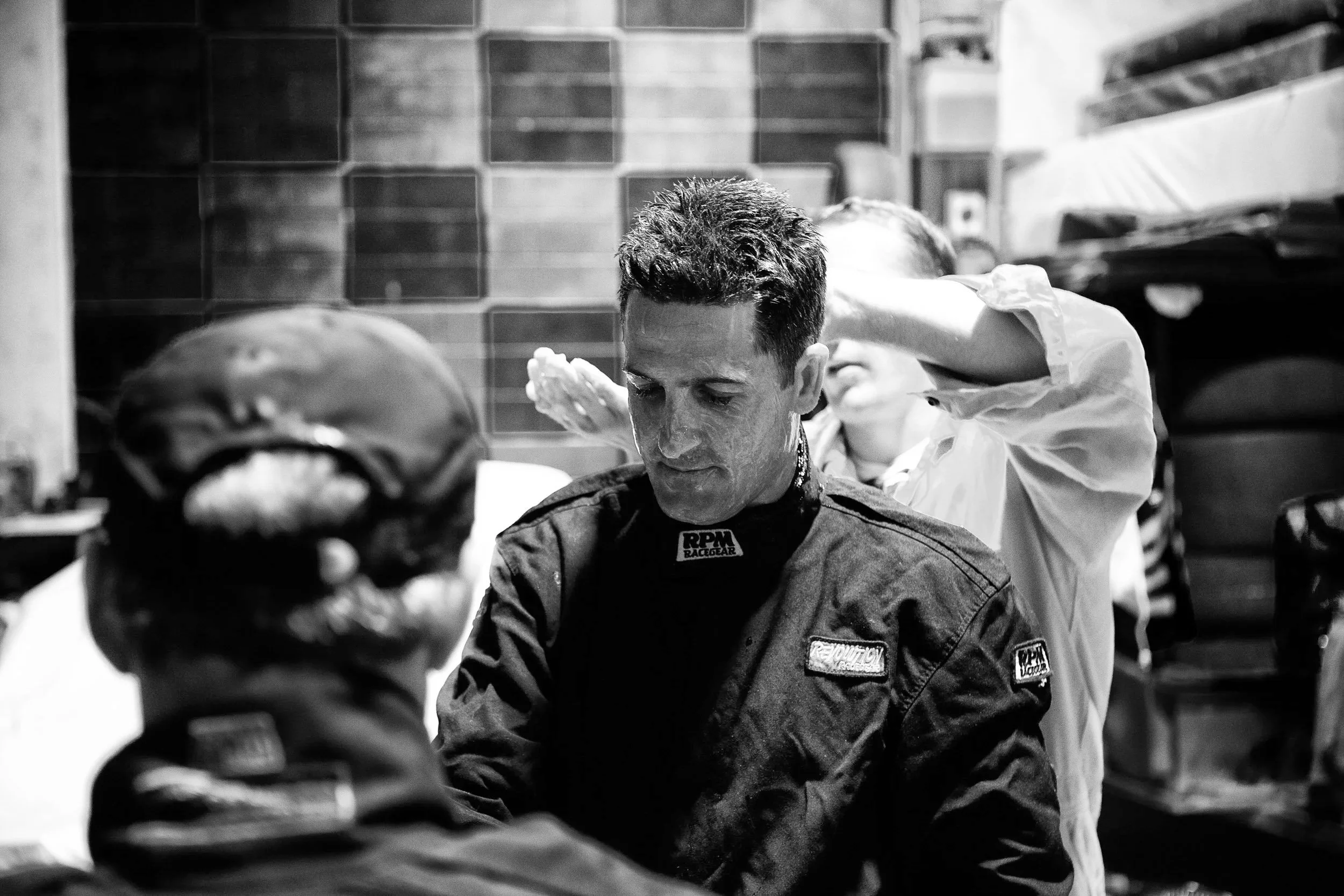
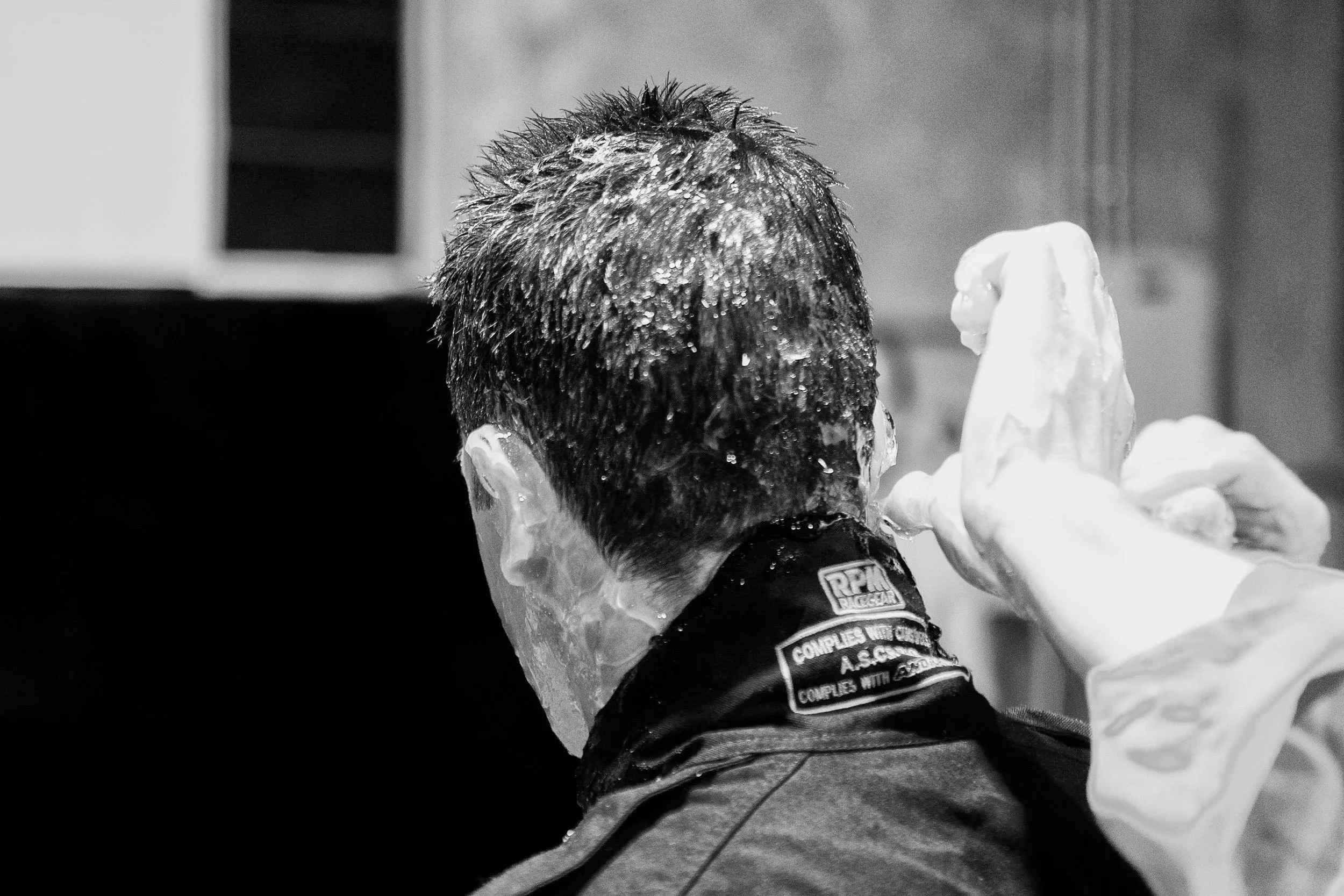
Once Jamie was suited up, covered in fire-retardant gel and ready to go, everything happened very quickly.
The flames were lit, Jamie moved exactly as we'd rehearsed and on his first circuit he stood up and hit the mark. Click.
Around he came again. Click.
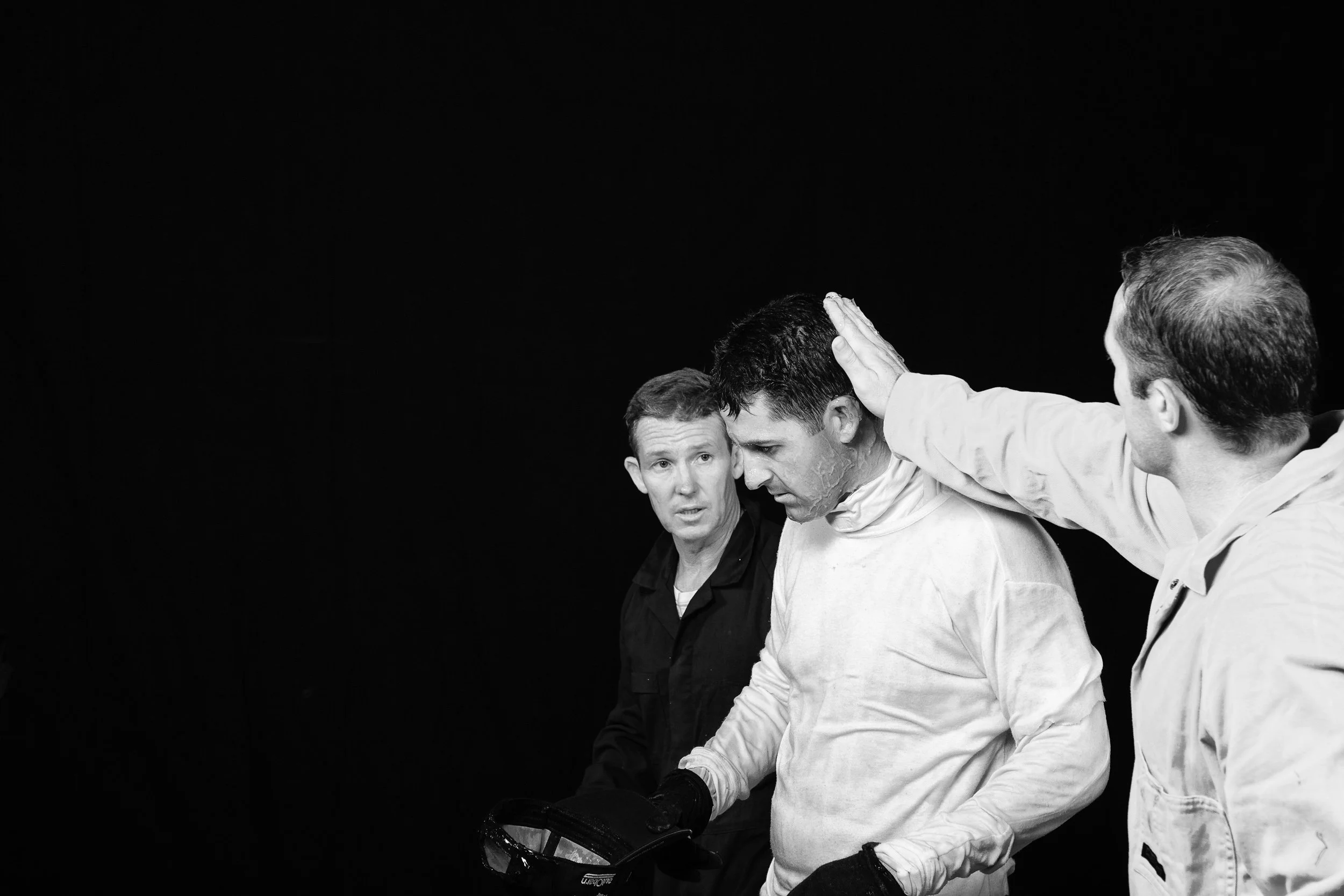
On the third pass the heat became too much. Jamie dropped to the ground and the stunt crew moved in immediately to extinguish the flames.
Only once everything was over did I look at the back of the camera.
The first frame was the one.
The pose was spot on and, completely by chance, the flames billowed out behind him in a way that almost looked like the Red Bull wings. Sometimes the photography gods decide to give you a break.
It's easy to look at the finished image and think, "Yeah, that's a cool photo."
What you don't see are the hours of planning, the rehearsals, the safety protocols, the problem solving and the dozens of small decisions that all had to come together for a fraction of a second.
The shot reminds me of a time when magazines were willing to invest in ambitious ideas simply because they believed it would make a memorable image. It wasn't created for likes, reels or engagement. It wasn't even called content.
It was simply a great idea, backed by a talented team, and I'm grateful I got to be the one behind the camera.